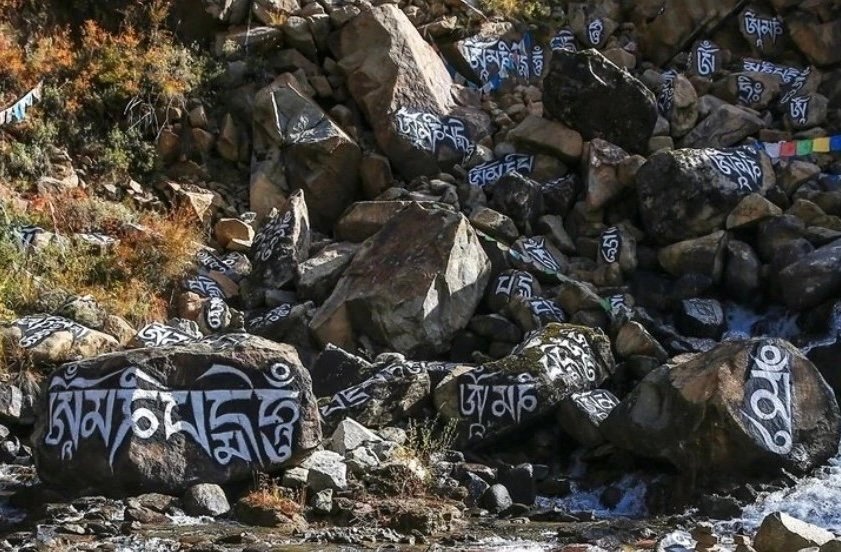
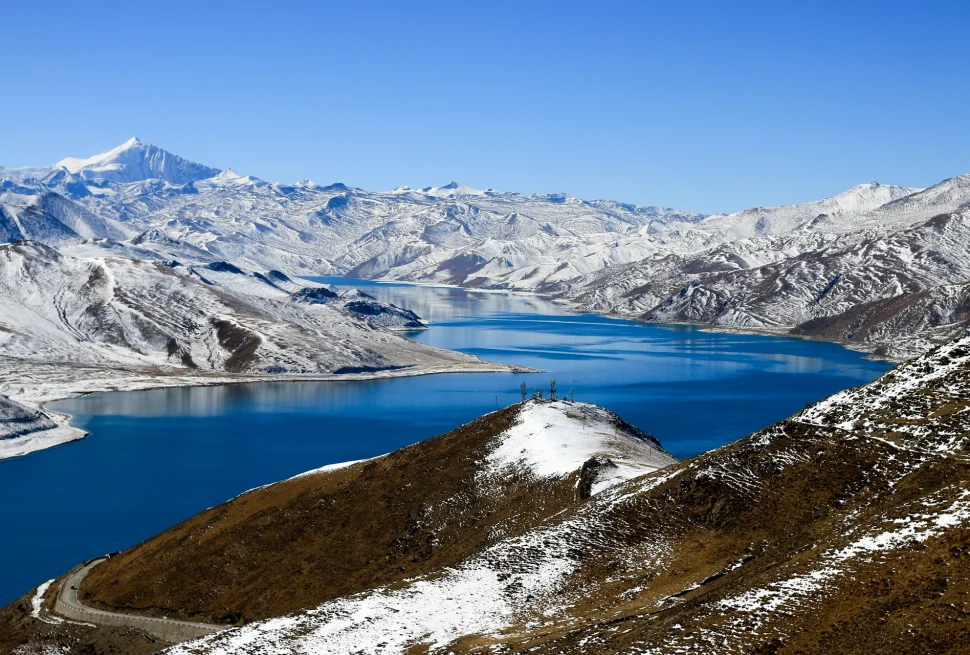
Marnyi Stone : In Tibetan, it is called “Duo Bang”, which means the stones built up.
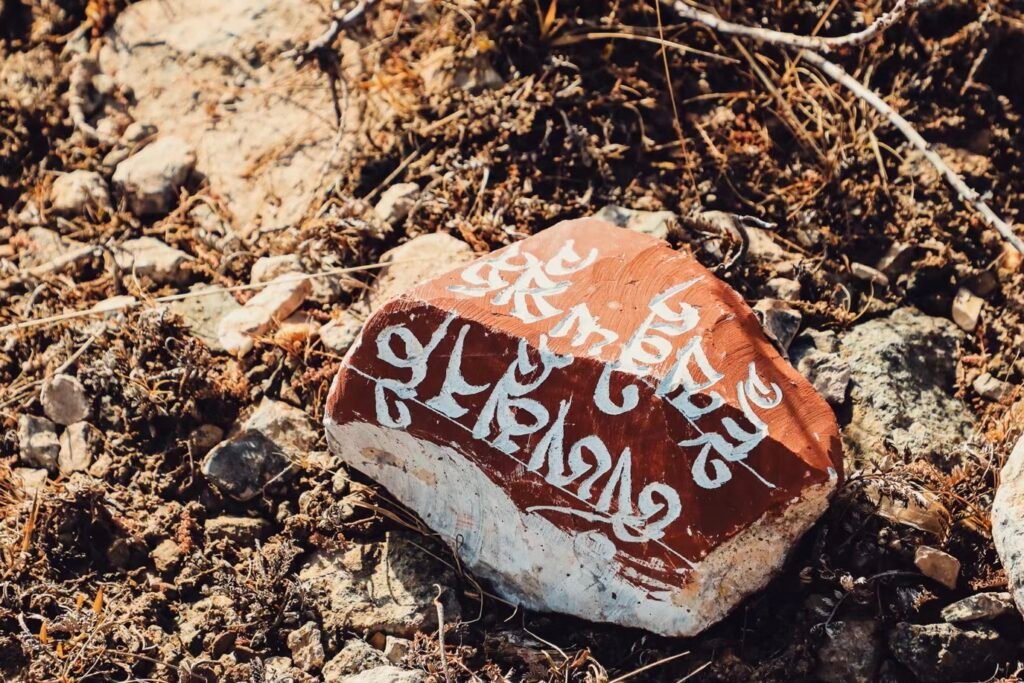
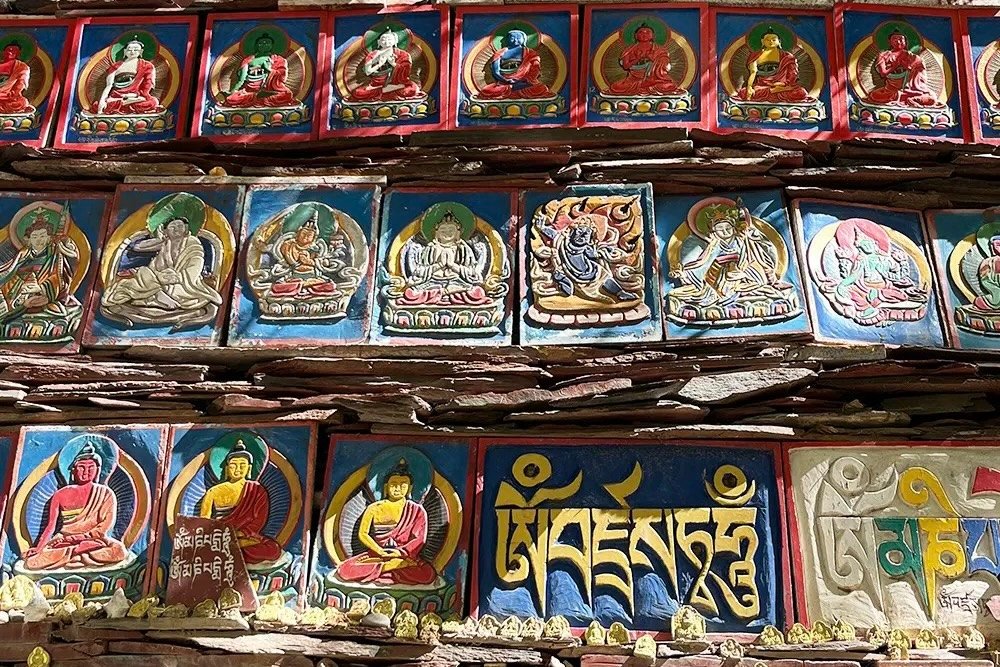
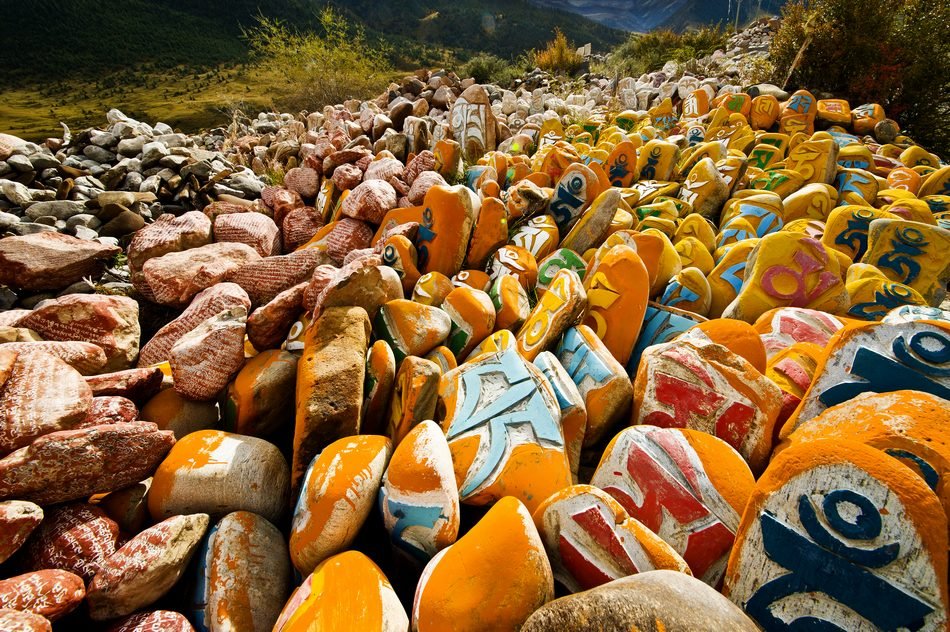
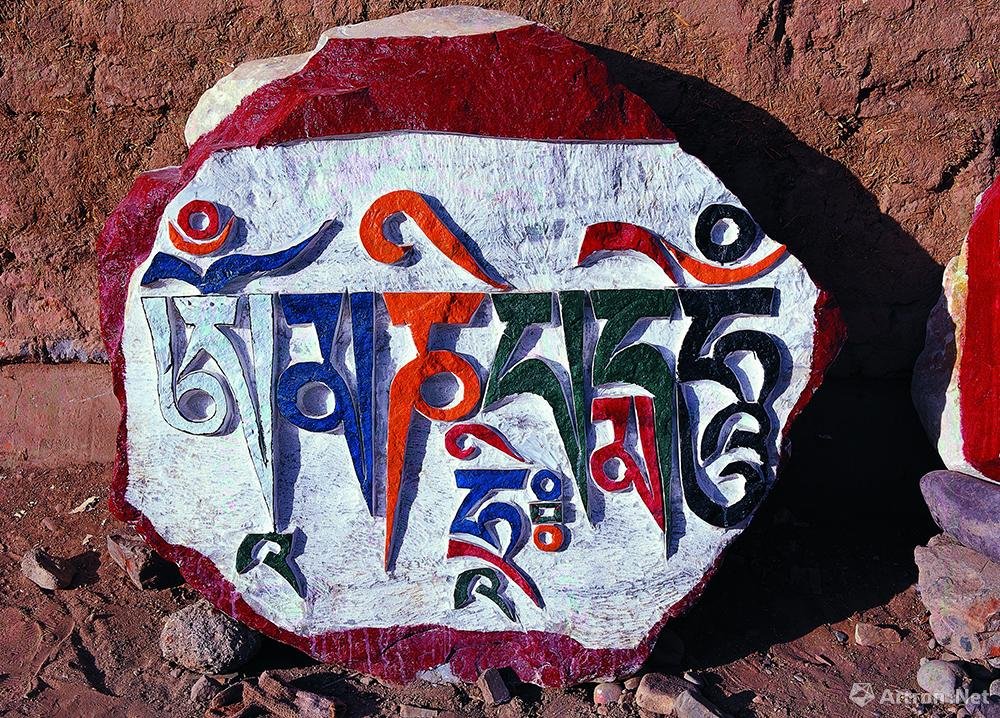
Marnyi Stone, in the mountains, intersections, lakes, rivers all over Tibet, almost can be seen a pile of stones and stone altars – Marnyi pile. Most of these stones and tablets are engraved with six-character words, discerning eyes, statues of gods, and various auspicious patterns, which are also masterpieces of Tibetan folk artists.

Overview of the Earth
“Ma Zhi stone” is a traditional custom handed down from ancient times. Many customs and ways of life of modern Tibetan compatriots, such as weddings and funerals, astronomical and calendar calculations, medical literature, singing and dancing paintings, traveling and choosing homes, choosing auspicious days, exorcizing disasters and evil spirits, divination and divination, etc., still follow the tradition of the ancient Yongzhong original religion to some extent. There are also many unique ways for Tibetan compatriots to pray for blessings: such as turning sacred mountains, worshiping gods, spreading wind horse flags, hanging colorful prayer flags, carving stone scriptures, placing mani piles, performing the hexagrams, offering Dolma plates, butter flowers and even using prayer wheels.
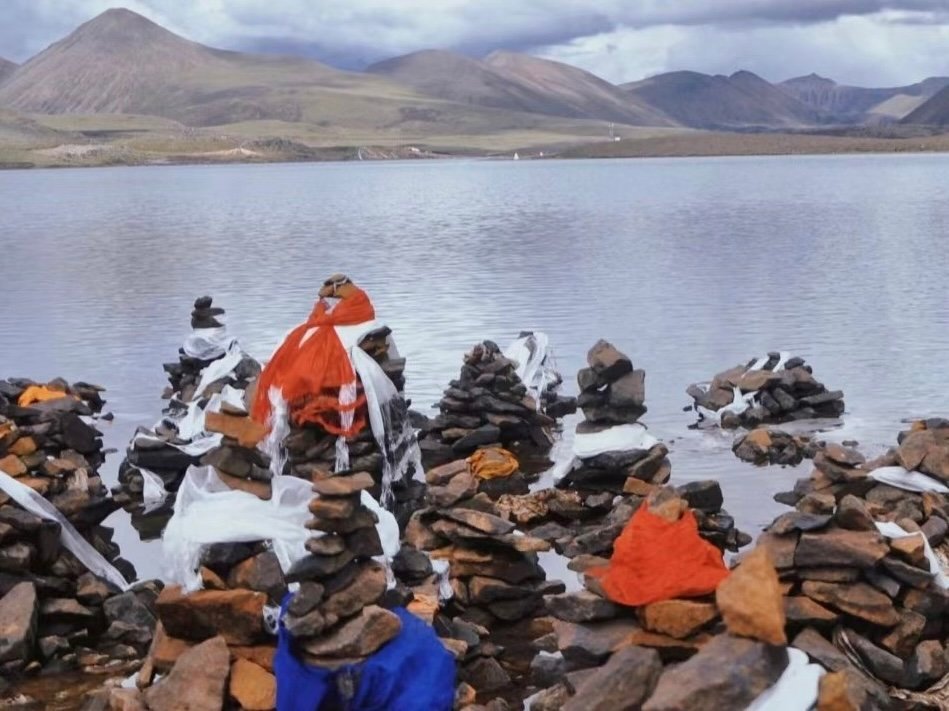
“Mani” comes from the Sanskrit Buddhist sutra “six character mantra Sutra” “Om Mamamimi Moo” for short, because the stone engraved “mani” and called “mani stone”; “Mani Pile” refers to the stone pile built on the stone slab or processed stone engraved with Tibetan scriptures, “six-character truth” or engraved with animal patterns, images of gods, Longjiu Wangdan patterns, etc. There are also heaps of various small stones without any pattern. The stone carvings “mani pile” in Tibetan areas can be seen everywhere, countless.
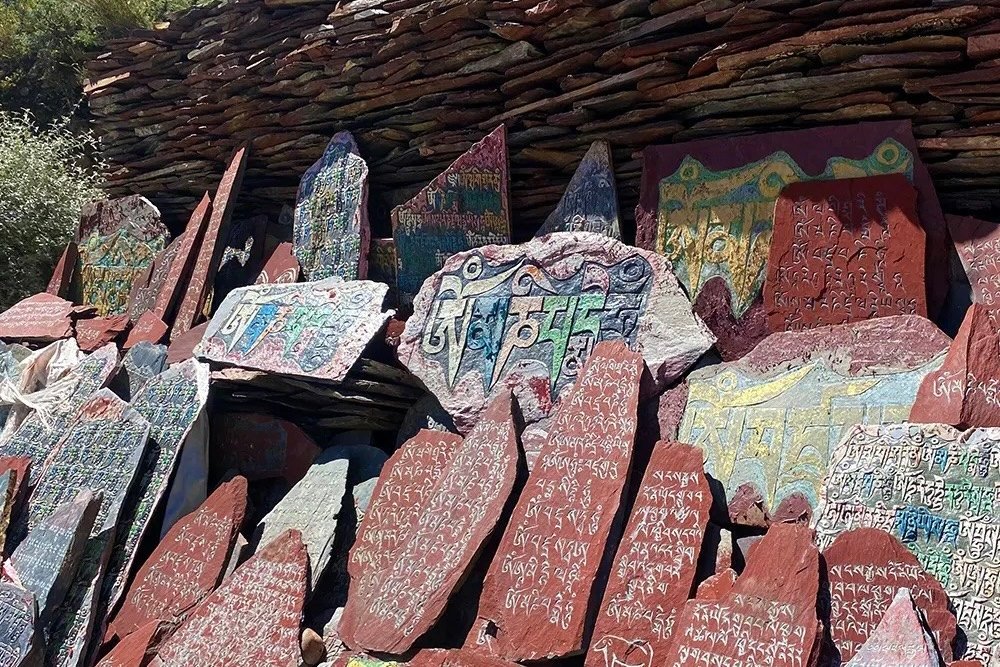
Tibetans have special feelings for Buddhist culture, and all men, women and children regard doing Buddhist work as noble. On the vast grasslands and remote mountain gully, people work hard without stopping, engraving scriptures and various Buddha statues and auspicious patterns on ordinary stones, and decorate them with colors, turning ordinary stones into mani stones. Devout Tibetan believers believe that as long as they persevere in the six words of the day and night meditation engraved on the stone, these stones will have a supernatural spirit, bring them good luck. As people carved tirelessly, mani stones of various sizes gathered together to form Mani piles and mani walls.
Historical origin
As a carrier of human social culture, stone has become a powerful witness of the inheritance and creation of social civilization with its immortal texture. Stone can not only make a variety of production tools, attack the beast to resist the enemy’s weapons, but also build houses and cities, grind powder and dispense medicine, and in some places, stone town houses. A large number of stone tools, sarcophagus, stone tombs, and stone watchtowers found during the survey of cultural relics can confirm how unusual stone was in the ancient people. The Tibetans cherish rare stones, and regard “Rangjiong” (Tibetan, natural) stones as sacred objects, such as Buddha statues, Buddha eyes, Buddha footprints, etc. In addition, the Tibetan headdress, collar multi-use coral stone, agate stone, fossils and a variety of beautiful stones strung together, intended to be a spiritual stone worship evolved form.
According to the Summary of Tibetan Archaeology, there was a large stone culture in ancient Tibet, which was a large stone primitive culture developed in the Neolithic tradition, and it was believed that it entered the Tibetan hinterland from the northeast Tibetan area around Qinghai Lake. There are many relics of this worship in Tibetan areas, divided into three forms: monolithic stone, stone circle, and stone. For example, South of the Great Salt Lake of South Tibet, Duoren found 18 columns, east-west direction. There are also two concentric stone circles at the west end, and three boulders in the center of the stone circle, the larger one is 2.75 meters high, and an altar is set in front of the boulders. At the east end of the line there is also an arrow made of stones. Similar monolithic stones are scattered throughout Tibetan areas, such as stone pillars in Pulan, Tibet; Gannan’s “long stone”; The “stone cow” on the mountain is suddenly independent and tens of meters high, which makes the local Tibetan and Han people worship. In Tibetan areas, especially in Kham District and some Amdo Tibetans, white stones are worshipped on roofs, door tops, windowsills and in the center of the land, and all places where gods are worshipped are represented by white stones. They believe that white stone is the essence of the snow mountain, the protector of the family, and the guardian of the fields and crops. It is also believed that the huge white mountain stone standing tall is the embodiment of the dragon woman and the goddess. All over the Tibetan mountains and valleys, the Mani pile beside the village entrance is the outstanding expression of the Tibetan mountain stone worship, the obvious custom.
Origin and development
Tibet is a vast and magical land sealed off by the Himalayas, Karakoram, Tanggula and Hengduan Mountains. A long time ago, the ancestors of the Tibetan people lived and integrated in this piece of high heaven and thick soil, silently and tirelessly creating their own civilization.
About 40 million years ago, the mountain building movement of the Eurasian plate impact turned the ancient sea of Tedis, which was originally a vast ocean, into a wonderful roof of the earth, and the wide rocks and pebbles in various forms are the most generous and abundant gifts of the heaven to this extraordinary highland of the earth.
Before the advent of Buddhist civilization, Yongzhong original Buddhism prevailed in snowy Tibet. At that time, people were in awe, worship, confusion and attachment to the unpredictable nature. As large as mountains and rivers, as small as wood and stone have become the abode of the God of human protection and destruction, so it is natural to become the object of homage for generations.
Tibetan ancestors rely on the mountains to eat, sharpening stone axes to hunt, chiseling stone POTS to cook food, building stone houses to shelter from the cold, and paying stone drops to drive away evil spirits, so as to maintain the enduring boulder worship and spiritual stone worship. Cliff stone carvings and mani stone piles scattered throughout Tibet are the concrete embodiment of this ancient belief and custom.
Most of the cliff stone carvings in Tibet were formed around the 10th century AD, which benefited from the general recognition and acceptance of various social strata of Tibetan Buddhism and the development of the entire social economy. After the 13th century, the wind of cliff stone carving was gradually declining, and Mani stone carving continued to develop almost uninterrupted, becoming the most widely spread Tibetan folk carving art in the Tibetan plateau through the ages, with numerous styles and features, and extremely rich expression content and material techniques.
Stone engravings
From the point of view of content: in addition to the “six-character truth” and Tibetan scriptures and the symbol of “swastika”, there are also various Buddha statues (Dharma protection, vajra, etc.), as well as dragon, frog, fish, bird, lion, elephant, stupa, flowers and other patterns. At the same time, more attention to decoration, and the rich secular life into the sculpture.
Scattered throughout the Tibetan areas, Mani stone carvings everywhere mark the traces of human spirit, occupying the vast natural space in point and face, highlighting the interconnected nature of human beings and other life from the geographical environment. Stone carving has become the most common form of artistic expression in Tibetan areas and a unique spiritual language of the Tibetan people.
Tibetans describe a firm and unchanging heart as “like a pattern carved on a stone.” Tibetans believe that the marks left on the stone are preserved for a long time, such as Gesar’s footprints, Shuan Horse’s stone prints, horse’s hoof prints, and the footprints of a historical celebrity.
With the expansion and popularization of Mani stone pile, Mani stone carving art came into being. Inspired and driven by religious ideas, whole-heart devotion, and almost unconditional creation to convey and reproduce the Buddha’s religious mission of “body, word, and mind” are the main characteristics of Tibetan Buddhist art, and are fundamental to Tibetan art. Mani stone carving artists, who are purely folk art in the cultural category, are usually farmers or herders in the spring, summer and autumn of the year, and only carve in the winter. In society, they do not have a good name such as sculptors, and people generally call them “Duoduo” (stone carving artists).
The carving techniques and harmonious color combinations were carved by ordinary Tibetans. They took the painting of Mani stone as a profession, but also for their own life to accumulate good karma. They religiously depict all day long, there are one word and one stone, there are six words and one stone, so that each stone has spirituality, and their spiritual stones are reverently placed in the mani pile.
Stone carving meaning
In legend, mountain passes, villages and water sources are mostly occupied by ghosts and spirits, so there are several ways to throw stones in the Mani pile: One is to suppress ghosts by stone, the other is to increase the protection ability of Mani pile to the place, which is also one of the accumulated merits, because it represents the protection of benevolent gods like a tower, and there is a saying that it protects the buried things under Mani pile from being exposed and destroyed.
According to legend, people or livestock cannot stop when passing through the mountain pass, otherwise they will get sick. Tibetans regardless of men and women, old and young, whether on foot or on horseback, as long as they pass by the “Mani pile”, in addition to taking off the top hat and bowing their palms, they also add a small stone to the pile of stones, and the devout shake the prayer cylinder and recite the “six-word truth”, always rotating around it in a clockwise direction, some even rotating for several weeks, in order to eliminate disasters and avoid disasters, give wealth and extend their years.
If you drive through the “Mani pile”, generally in the car to pass in front of it also to shout “raze”. They would shout and throw Longda into the air, hoping it would bless the traveler’s journey.
In order to seek the blessing of the gods and avoid disaster, when walking or riding through the mountain pass, a stone engraved with Tibetan scriptures was prepared in advance and placed respectfully at the mountain pass. If you do not have a stone engraved with scripture, you can also take a good-looking stone instead. If there is no stone, try to place a bone or a piece of cloth, an animal hide or a pinch of wool or hair, etc., and when offering them, cry out: “Rasolo, the gods will prevail!” The devil will fall! Blah, blah!”
Mani pile if in the city street or village bypass fork, every religious festival when turning the bible or turning the mountain, people must come to the mani pile before, on or next to it lit mugwort or cypress branches, and reverently sprinkle barley, wheat grains and the first barley wine or thick tea to it, praying while praying, simmering mulberry sacrifice. For the peace, auspiciousness and perfection of sentient beings!
In short, Mani stone carvings are meant to exorcise evil spirits and protect sentient beings. People everywhere in Tibetan areas can see a different shape of mani stone carvings, expressing the infinite good luck of the Tibetan people. Since ancient times, Tibetan believers have believed that painting more than one Buddha statue, carving more than one character, like more pilgrimage, more circle of sutra, will bring luck and grace to this life and the next life. The Tibetan people used the “mani pile” as a hunting tool, a defense fortifications, and a signpost for gods and mortals; Nowadays, it has evolved into a symbol of keeping away evil spirits and bringing peace and auspiciousness to people and animals. It can be seen that “Mani pile” in Tibetan areas enduring reason.