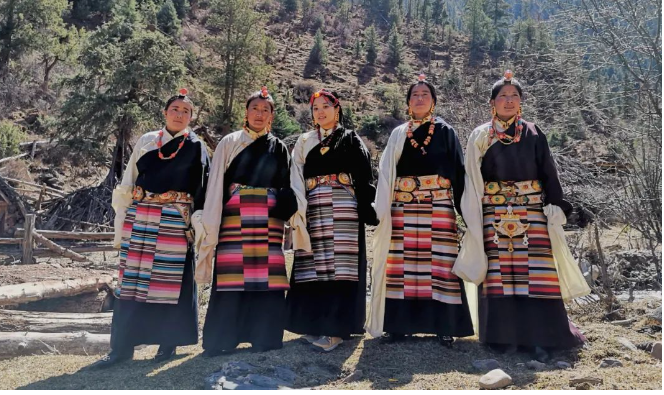
Tibetan clothing has a long history, the study of Tibetan clothing will inevitably promote and deepen the study of the formation of the Tibetan nationality and the development history of its culture. According to historical research, as early as around the 11th century BC, Tibetan clothing may have had the basic characteristics of modern Tibetan clothing.
Later, due to the interaction of departments and ethnic groups living in various parts of Tibet and the influence of other factors, Tibetan clothing continued to evolve and develop, and then became more abundant.
Tibetan clothing is the ordinary clothing of the Tibetan people, and it is also the most prominent feature that distinguishes it from other ethnic groups.
Main feature of Tibetan Clothing
Tibetan clothing is the ordinary clothing of the Tibetan people, and it is also the most prominent feature that distinguishes it from other ethnic groups. Its basic characteristics are that the coat should also be worn inside the front, the right skirt, the waist front is thick, the sleeves are wide and long, the collar, the front edge, the cuff, the hem, etc., are mostly edged with fine fur, wool or color cloth. During the day, take off more than one sleeve or two sleeves, and tie the left and right disks at the waist. When men wear a belt, the lower hem of the robe is generally raised to the knee; When girding the waist, women generally lift the robe slightly, so that the hem covers the ankle joint.
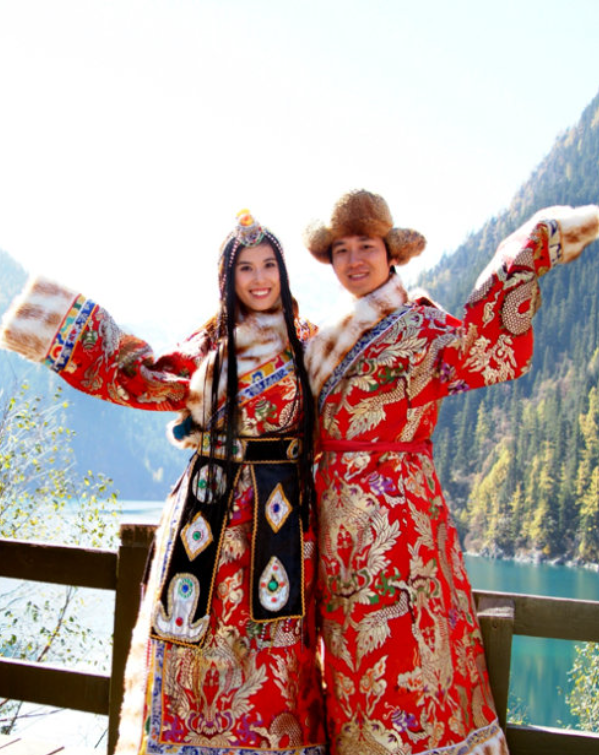
The grain and style of Tibetan Clothing
The textures of the Tibetan clothing are varied, including fur, floral cloth and so on. In terms of style, the Tibetan clothing does not need to be tailored, and most of them are linear clothes. CangZhuang varieties, including long sleeve turtleneck shirt, wide waist coarse linen underdrawers, long-sleeved furred robe, cloth robe, sleeveless gown, long tank top, short waistcoat , apron, boots, belt , , cap, etc. The characteristics of the hidden clothing are wide, warm, practical, and multi-purpose.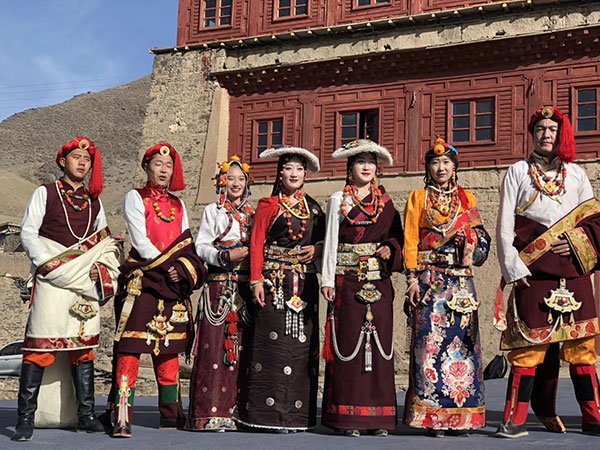
The regional difference of Tibetan Clothing
Although there are regional differences, the basic characteristics of the Tibetan clothing are large front, wide waist, long sleeve, extra long, no buckle. The materials and techniques used for storage in different regions are different. For example, urban residents prefer to use high-grade wool for making robes, wool for agricultural areas, and fur for pastoral areas. Men’s robes are heroic and women’s are handsome.
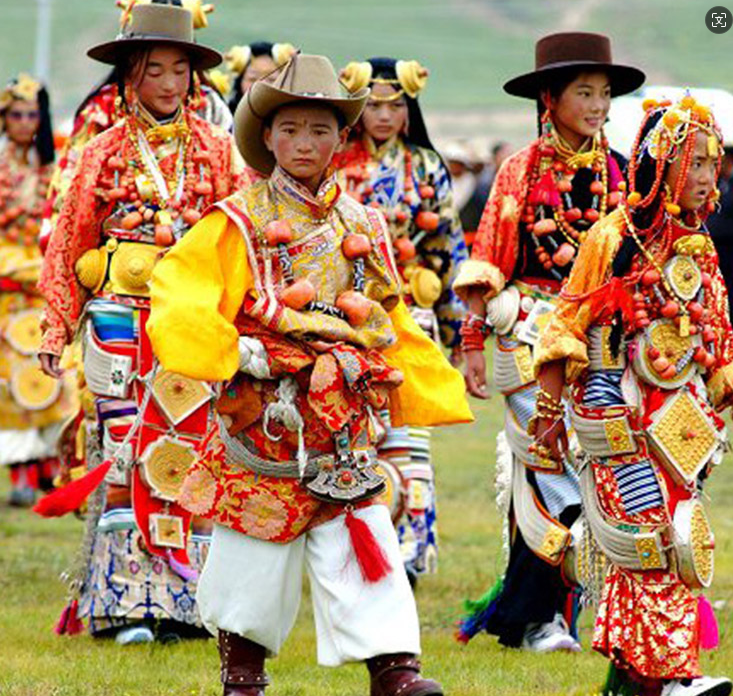
The decoration and symbolize meaning of Tibetan Clothing
The decoration of the Tibetan clothing is rich and varied, and the belt and boots are often attached to the jewelry. The colors and patterns of the Tibetan clothing are also rich in symbolism. For example, white represents purity and goodness, black has special religious significance, red symbolizes strength and detachment, yellow symbolizes light and hope, blue symbolizes mystery and grandeur, and gold and silver represent wealth and dignity.