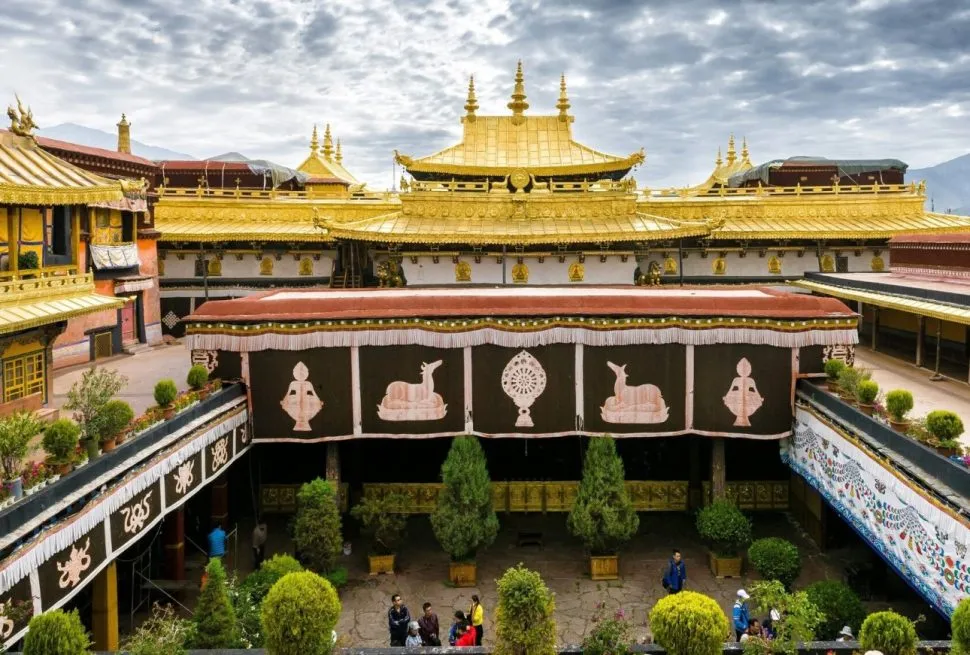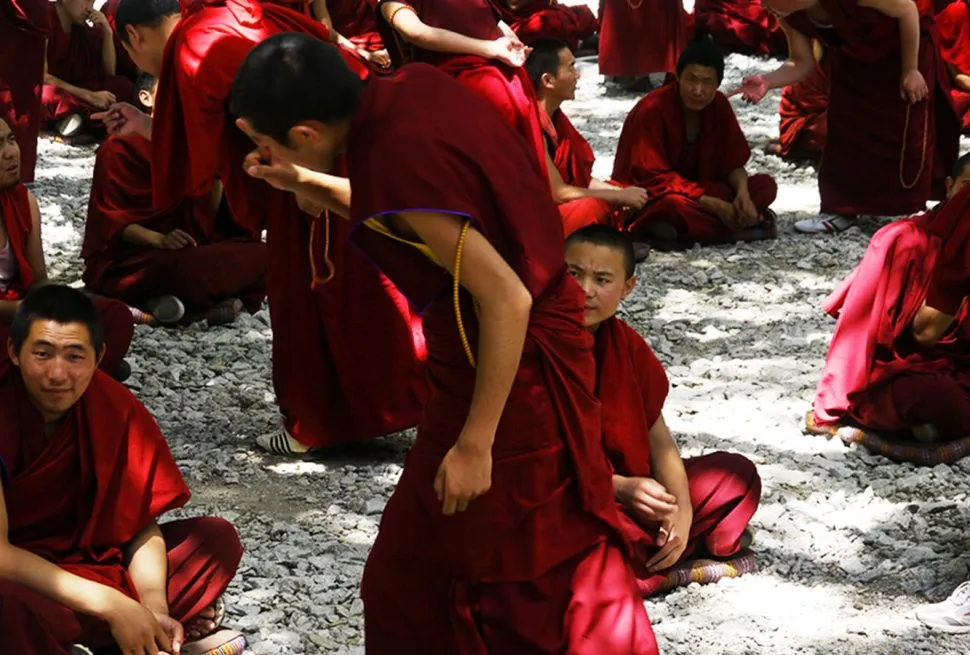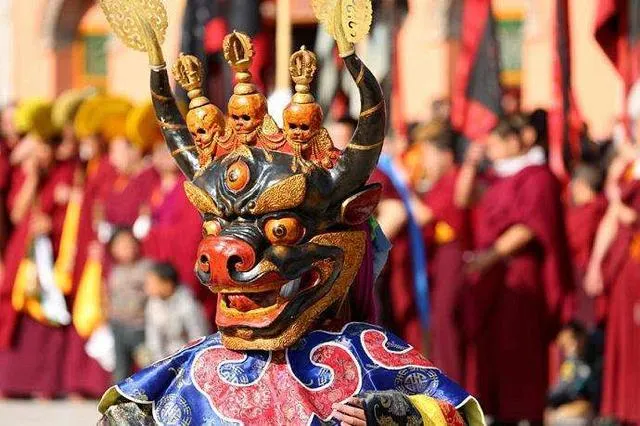
In the vast and boundless, mysterious and magnificent western Tibetan Plateau, stands a world-famous sacred mountain — Kailash. It is like a bright pearl, set in this sacred land, not only with its majestic natural landscape to attract the world’s attention, but also because of the rich and mysterious myths and legends and a long history and culture, has become the heart of countless believers in the holy land, carrying across the millennium of faith and awe.
I. Basic Overview of Kailash.
Kailash, meaning ‘Mountain of the Gods’ in Tibetan and called ‘Shiva’s Paradise’ in Sanskrit (Shiva is the main god of Hinduism), with an altitude of 6,656 metres, is the main peak of the Kailash Mountain Range. It looks like a huge pyramid, the top of the mountain year-round snow, in the sunshine shining with the holy light, exudes a let a person can not resist the sacred atmosphere. The location of Kailash is extremely special, located in the Tibet Ali region Pulan county territory, here and India, Nepal adjacent to the surrounding environment is magnificent and full of mysterious colours.
II. Mythology.
(i) Buddhist legend: Milarepa’s fight with Nara Benjamin
Among the many legends of Tibetan Buddhism, the story of the fight between His Holiness Milarepa and the Benjaminist monk Naropenjung at Kailash is widely spread. According to the legend, Kailash was initially a holy place for the Benjaminists to practice, and Nara Benchong was stationed there to practice. Later, His Holiness Milarepa, the ancestor of the Kagyu school of Tibetan Buddhism, also led his disciples to come here, expecting to practice here. Both sides believed that the Kailash was an extremely beautiful place to practice, and they were at odds with each other, eventually deciding to determine who was qualified to stay through a dharma fight.
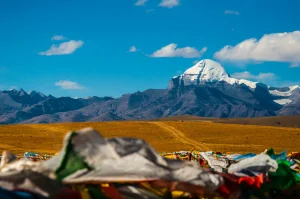
The day of the fight, the two agreed, who can be the first in the next day before the first ray of sunshine to the top of the peak of the Kailash, who is the winner. The day of the game, that if Ben Qiong early in the morning to carry a huge drum, devoutly face towards the Kailash prayer, praying for God’s blessing to climb to the top of the mountain first. Prayer finished, his feet under the force, driving the drum with their own air, towards the Kailash flying. At this time, Mila Riba venerable but still in a deep sleep. Disciples anxious, rushed into the room to wake him up. His Holiness Milarepa, however, did not panic and reassured the disciples that there was no need to hurry, the sun had not yet risen. He then unhurriedly dressed and arranged his hair, and then recited some words under his breath. Just as the sun slowly peeked out of the horizon in the sky, the first ray of sunlight instantly illuminated the summit of Kailash, His Holiness Milarepa’s body flashed, even with the golden sunlight appeared on the mountaintop. Seeing this scene, Na Ruobeng Qiong was so shocked that he fell from a high altitude with his drum. That huge drum rubbed down along the rock wall of the mountain, leaving a huge groove on the mountain, which is said to be the origin of the conspicuous gully on the mountain of Kailash that people see today. The legend of this fight not only highlights the lofty status of the Kailash in Benjaminism and Tibetan Buddhism, but also reflects the collision and fusion of different religious cultures that once existed on this piece of land.
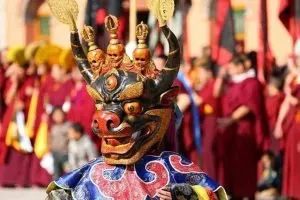
(ii) Benjaminist Legends: Origin of the Sacred Mountain and the Abode of the Gods
As the original religion of Tibet, Bön Buddhism has a unique and profound interpretation of Kailash. In the Benzo classics, it is described as the ‘Mountain of Nine (Wan) Words’, which is said to be the dwelling place of 360 Benzo deities. It is said to be the residence of the 360 deities of the Benzai religion. When the ancestor of the Benzai religion, Dumba Sinwang, descended from the sky, Gonpozi was the place where he landed, and therefore it is regarded as the ‘abode of the deities’ and the ‘centre of the universe’.
Legend has it that a river descending from Kailash eventually feeds into the sacred monasarovar Lake. Not only that, but there are four great rivers originating from Kailash, flowing in four directions: east, south, west and north. Flowing to the east when the Tibetan Tibetan cloth horse spring river, the river is clear, emerald rich, it is said to drink this water people will be as robust as the long horse general strong; Flowing to the south of the Ma Jia Tibetan cloth peacock river, the silver sand shining, drink its water such as the peacock like lovely; Flowing to the west of the Rangqin Tibetan cloth elephant spring river, rich in gold, drink this water people strong as elephants; Flowing to the north of the Sengge Tibetan cloth lion spring river, rich in diamond deposits, drink this water people brave like a lion. People who drink this water are as brave as lions. These legends make Kailash in the minds of the Benzo believers have become a sacred source of nurturing all things, giving life strength, but also explains why many believers go to great lengths to travel long distances to come to worship, they are eager to draw strength in this holy land, to obtain the blessings of the gods.
(iii) Folklore: the love and guardianship of the nymph Nasuna
In folklore, there is also a beautiful and touching love legend about Kailash. A long, long time ago, there lived a beautiful nymph named Nasuna on the mountain of Kailash. She lived in a cave, daily accompanied by wonderful songs and beautiful music, making the whole valley is full of peace and beauty.
One day, a young Tibetan herdsman passed by and was deeply attracted by Nasuna’s song, followed the sound and dived into her cave. The two fell in love with each other and soon fell in love. However, in Tibetan tradition, once a woman falls in love with a man, she stays with him forever, and Nasuna’s love affair with the herdsman violated the traditions of her people. Under the strong opposition and threat of her clan, Nasuna had to bear the pain of leaving the mountain and separating from her beloved.
But Nasuna’s love for the herdsman was rock solid and unforgettable. She often flew back to the mountain to look for signs of her beloved. However, by this time a temple had been built on the mountain, in which many monks were devoutly chanting. Nasuna was so shocked that she thought the mountain belonged to her and could not accept human beings building structures there. So, with her divine powers, she started destroying the temple. However, no matter how hard she tried, the temple always reverted to its original state after being destroyed. Later, Nasuna gradually understood that the temple existed so that more people could have access to the sanctity of Kailash, and that people’s faith could not be stopped. Eventually, Nasona stopped the vandalism and started protecting the mountain and the temple instead. This legend makes people believe that Gonarezhou is not only a natural wonder, but also a sacred place that carries love and guardianship, reflecting the Tibetan people’s reverence and respect for nature and faith.
III. Historical stories.
(i) Historical evolution of religious shrines
Tracing back from the long river of history, people’s worship of the sacred mountain of Kailash can be traced back to around 1000 BC. Records of the early worship of the mountain can be found in the Ramayana, the Indian epic of creation, as well as in the Tibetan historical books, such as the Gandhi Shanshi Zhi and the Book of the Past, among others. In the course of the development of different religions, Kailash radually became the holy place and world centre of Benjaminism, Tibetan Buddhism, Hinduism and Jainism.
During the pre-Buddhist period of the Elephantine Bönchens, Kailash was already well known and regarded as an important sacred site for the Bönchens. As time went by, Buddhism was introduced to Tibet and gradually developed, and Kailash was incorporated into the Buddhist belief system, becoming one of the four sacred mountains of Tibetan Buddhism. In Hinduism, the mountain is considered to be the abode of Lord Shiva, the most powerful and highest-ranking of the three main gods of Hinduism, and the headwaters of the Indus and Ganges Rivers originate here, which makes the mountain irreplaceable in the hearts of Hindu believers. And in Jainism, which emerged in the 5th – 6th centuries B.C.E., Kailash was known as Ashtapada, the highest mountain, where Rishabhanaksha, the founder of Jainism, attained liberation. For centuries, Gangtok has been attracting pilgrims and explorers from different religions and regions, who set foot on this sacred land in awe, seeking spiritual solace and liberation.
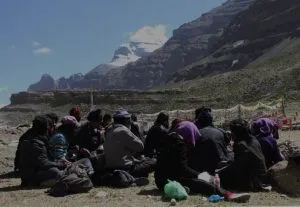
(ii) Formation and transmission of transmigration culture
The activity of circling around the mountain is a tradition with a long history and great religious significance. Legend has it that, around the Kailash turn around a circle, can wash away the sins of a lifetime; turn around the mountain thirteen times, can be in the five hundred reincarnation in the hell of suffering; if the turn around the mountain a hundred times, can be in this life into a buddha ascension to heaven. And in the Gonzaga life year of the year of the horse turn a circle, its merit is equivalent to the usual year turn thirteen circles. This mountain-turning culture has been gradually formed and inherited in the course of history, and has become the lifelong pursuit of many believers.
According to records, in the 12th century, the Drukpa Kagyu monk Guo Cangba opened up the Kailash’s transmountain road, and the transmountain route that people take today was initially shaped at that time. The entire route is about 57 kilometres, at an altitude of 4,800 metres to 5,723 metres, the terrain along the way is steep, the environment is harsh, but this did not stop the believers in the footsteps. They are either on foot, or kowtow, step by step along the mountain road, with perseverance and unparalleled piety, to complete this sacred journey. In the process of turning the mountain, the believers will pass through the Zabuzhi Temple, Chökyu Temple, Chökyu Temple and Zuzhu Temple and other small temples, each of which carries a wealth of historical stories and legends, and pilgrimage to these temples has become an integral part of the activities of turning the mountain. Every year there are a large number of pilgrimage teams from India, Bhutan, Nepal and China’s major Tibetan communities, not far from thousands of miles to come to Kailash mountaineering, so that the sacred meaning of this place in the flow of years and years continue, has become a connection between different regions, different ethnic believers in the heart of the link, but also witnessed the inheritance and development of religious culture.
(iii) Special historical exploratory events.
Throughout history, Kailash has also been closely associated with a number of special exploratory events. For one, during the time of Nazi Germany, Hitler ordered five SS men and Nazis led by Heinrich Haller to secretly travel to Tibet in search of a mysterious place called Shambala, which was speculated to possibly be located near Gonzaga. Legend has it that Shambala hides the Earth’s axis, and Hitler was convinced that if he could turn the world’s axis, he could turn back the clock and allow Nazi Germany to return to the top of the heap, restart the war and win. Although this quest ultimately came to nothing, it added a touch of mystery and legend to Gonarezhou, and also reflected the unique attraction and mysterious charm that Gonarezhou has in the world from the side.
IV.Concluding.
With its unique myths and legends and heavy historical stories, the sacred mountain of Kailash has become a symbol of the perfect fusion of nature and culture, faith and history. It is not only a holy place in the hearts of Tibetan people, but also a valuable spiritual treasure for all mankind. No matter how the years change, Okrug will stand there, witnessing the vicissitudes of the world, carrying people’s aspirations and pursuit of a better life, and continuing to write its own legendary chapter.
V.Travel tips.
Document Preparation: Be sure to handle the border pass in advance. It is more convenient to do it at your place of household registration, and you just need to bring your ID card. If you handle it in places like Lhasa, you may need to queue up during the peak season, and you might also need a certificate of no criminal record.
Physical Adaptation: Take anti-altitude sickness medications such as Rhodiola rosea about 1 – 2 weeks in advance. After arriving in Lhasa, stay for 2 – 3 days to get used to the plateau environment before heading to Mount Kailash.
Best Travel Time: The best time to visit is from April to June and from September to October, avoiding the rainy season and the period when the mountain is closed due to heavy snow in winter. If you want to experience the religious atmosphere, you can choose to go during Saga Dawa Festival on the 15th day of the fourth month in the Tibetan calendar.
Itinerary Planning: Starting from Lhasa, a regular itinerary takes about 15 days, including attractions like the Mount Everest Base Camp. You can also go from Kathmandu via the Gyirong Port, which takes about 10 days.
Transportation Mode: You can choose to charter a car or join a tour group. The journey is long and the road conditions are complex, so having a professional driver and guide is safer. There are also long-distance buses, but there are few departures and it takes a long time.
Clothing: Prepare down jackets, hardshell jackets, thermal underwear, hats, scarves, and gloves, as the temperature at night is extremely low.
Hiking Equipment: Comfortable and anti-slip hiking shoes, trekking poles, and knee pads to reduce the pressure during hiking.
Others: high-factor sunscreen, sunglasses, sun hats to prevent UV rays; commonly used medications, such as cold medicine, gastrointestinal medicine, antipyretics, and motion sickness medicine; high-energy foods, like chocolate, energy bars, and nuts.
Accommodation and Diet: There are mostly inns and homestays around. The accommodation conditions are simple. The diet is mainly Tibetan cuisine. If you are not used to it, you can bring your own snacks. When hiking, bring enough water, and there are supply points on the way, but it’s better to be prepared for emergencies.
Cultural Respect: Respect local religious beliefs and customs. Dress appropriately when visiting temples, and do not take photos of believers without permission.
Environmental Awareness: Protect the ecological environment, do not litter, and try to take the garbage away.