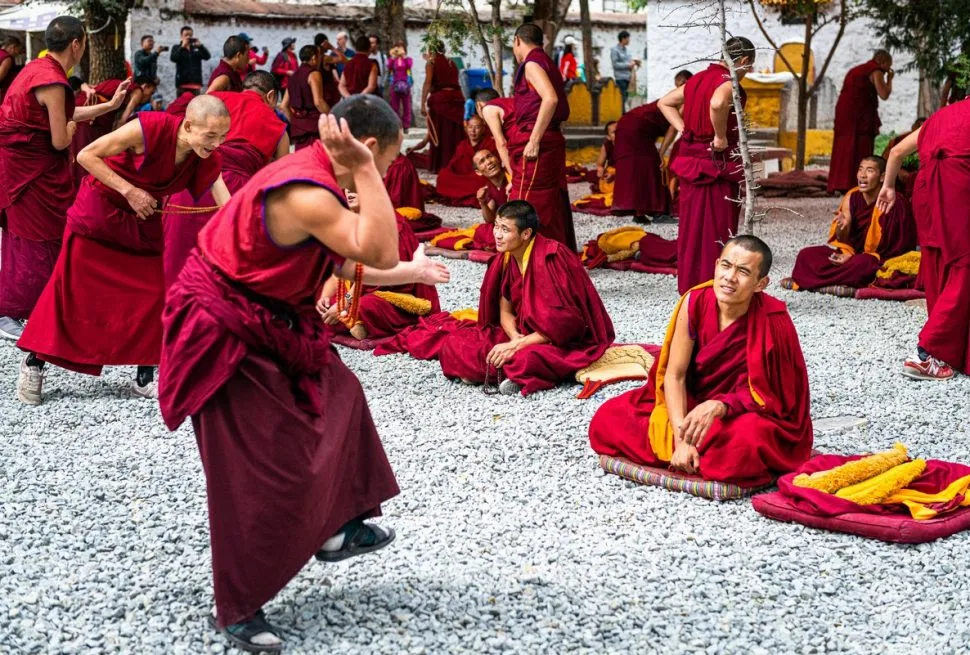
Lhasa, the capital city of Tibet Autonomous Region, China, sits nestled in the heart of the Qinghai-Tibet Plateau, often referred to as the “Roof of the World.” This ancient city, with a history spanning over 1,300 years, is not only a political, economic, and cultural hub but also a sacred place for Tibetan Buddhism.
Lhasa is renowned for its stunning natural landscapes and rich cultural heritage. The Potala Palace, a symbol of Tibet, stands majestically on the Red Hill, overlooking the city. This magnificent palace was once the residence of the Dalai Lama and now serves as a museum showcasing Tibetan art, history, and religion. Another notable attraction is the Jokhang Temple, the spiritual heart of Tibet, where pilgrims from all over the world come to pray and circumambulate the sacred site.
The city’s charm is further enhanced by its traditional Tibetan architecture, vibrant markets, and warm hospitality of its inhabitants. The Barkhor Street, surrounding the Jokhang Temple, is a bustling area filled with shops selling Tibetan handicrafts, jewelry, and souvenirs. Here, you can also experience the unique Tibetan cuisine, characterized by its use of yak meat, butter tea, and tsampa (a roasted barley flour).
Despite its remote location, Lhasa has undergone significant modernization in recent years, while still preserving its unique cultural identity. The city is connected to other parts of China and the world through air and road networks, making it accessible to travelers and adventurers seeking to explore the mysteries and wonders of Tibet.
In summary, Lhasa is a fascinating blend of ancient tradition and modern development, offering a glimpse into the rich cultural and religious heritage of Tibet. It’s a must-visit destination for those interested in exploring the depths of Tibetan culture and the breathtaking landscapes of the Qinghai-Tibet Plateau.