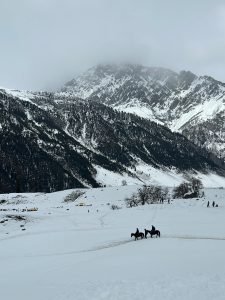
When the hustle and bustle of the city is shredded by the gusty winds at an altitude of 4,500 metres, and when the edges of reinforced concrete are melted by the rolling snow-capped mountains, the story of a group of people and horses on the grasslands of Tibet is still being written. They measure the land with their reins and carve history with their hoofprints – there is no ‘fastest shortcut’ here, only the warmest way back.
Camp with Horses
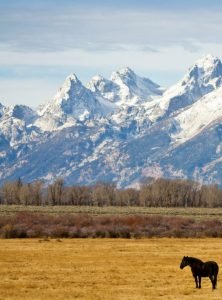 Sangchu Drolma is 35 years old and runs a family ranch and horse guide. Sangchu’s ranch has more than 20 yaks and 3 Tibetan horses. Every summer, she leads a team of horses across the grassland to provide visitors with the ‘Tibet on Horseback’ experience. ‘Horses know the heartbeat of the grassland better than yaks do.’She said.
Once, a French photographer travelling alone got lost in a storm, and Sangchu rode through the night to find the shivering foreigner in a mountain pass at three in the morning. She hummed an ancient pastoral song in Tibetan to calm the other, then carried him back to the camp on horseback. ‘At that moment, I understood that a horse is not only a means of transport, but also a guardian of life.’
The Festival of Horse Racing
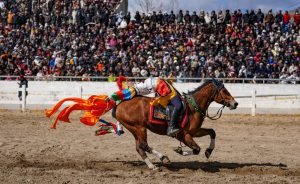
At the annual Linzhi Horse Racing Festival, trainer Tsering’s ‘Black Stallion’ always wins. But what is less well known is that the horse was once abandoned – left to die at the foot of a mountain by its owner, Tsering fed it yak milk for three months until it regrew robust muscles.
‘Horse racing is not about speed, it’s about who knows the horse’s heart better.’Tsering said. Nowadays, his horse team not only participates in races, but also helps local herdsmen transport supplies. Last winter, an SUV was trapped in a blizzard, and Tsering led his horse team on a 15-kilometre trek through the night, using the back of his horse to lift out the trapped passengers. ‘The temperature on a horse’s back can melt the hardest snow and ice.’
Tibetan medicine, horses, life
Before the cliff road to Mutuo was built, Zaxi’s grandfather, a horse doctor in Mutuo County, travelled all over the mountainous countryside with a medicine chest on his horse’s back to treat the sick. Today, Zhaxi still maintains this tradition – a leather pouch filled with herbs and a stethoscope is always hanging on her horse’s back.
‘Some patients live in villages 5,000 metres above sea level, where cars can’t get in, so they have to go on horseback.’Zhaxi said. Last year, she treated a herdsman whose heart attack was triggered by high altitude sickness by riding a horse between the camp and the hospital for three consecutive days. ‘The horse knows where the nearest stream is and where to avoid dangerous rock walls.’
Horseback Riding to the Stars Camping
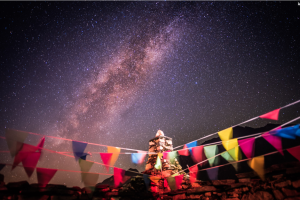
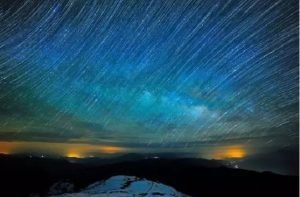
Young people want to go to Lhasa to work, no one wants to inherit the horse team. But Ngawang was unwilling to give up his ancestral business, so he upgraded the traditional horseback experience – launching a ‘starry sky camping team’, ‘Tibetan opera culture tour’, and even using live broadcast horseback riding through no man’s land. Ngawang’s horse team is equipped with GPS locators and first-aid kits, but still retains the traditional copper bells used to chase away wild wolves from the grasslands.
‘I want the world to see that Tibetan horses are not just a means of transport, but a carrier of culture.’Ngawang said. Currently, his horse team’s annual income has risen from 50,000 yuan to 200,000 yuan, and has driven more than 10 villagers into employment.
Guardians of Nature, Tibetan Fire Fighters
Yumai in early spring is still wrapped in the cold, the snow on top of the mountain in the sunrise burst into fine silver flakes, fell into the dark green virgin forest. Yumai river wrapped with ice meandering through, in the river valley in the open place to throw out a broken drill like water beach, more than twenty Tibetan-style wooden buildings scattered in the depths of the peach forest, streamers in the zero-degree air solidified into colourful specimens.
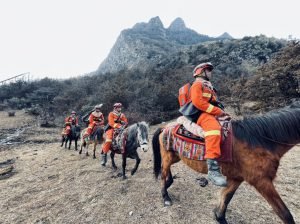
At this time, the altitude of 4700 metres of the ridgeline, Tibet Forest Fire Brigade Yumai squadron of orange figures are measuring the national border.
Thirteen horses carrying fire prevention equipment travelled between the crags, and the crunching sound of the horses’ hooves breaking the thin ice startled a group of rock sheep. The Beidou terminals worn by the riders are flashing red, drawing a winding electronic fence above the snow line.
As the last rays of the setting sun sink into the Himalayas, the sound of horses’ hooves still echoes across the grasslands. The horses in these stories are messengers, partners and living epics. What they carry is not only the human body, but also a nation’s reverence for nature and the inheritance of history.
Horseback life in Tibet is never a fantasy of ‘escaping reality’, but a profound dialogue about life, land and dignity.
Trip Tip:
Best Season: June-August (grassland oasis), September-October (intoxicating autumn colours).
Highly recommended experience Items:
Horse Racing Festival in difference places (July-October)
Horseback Exploration (need to apply in advance)
Horseback trekking around Lhasa (with guide)
Notes:
High-altitude areas to prepare anti-high reflex drugs, avoid strenuous exercise.
Respect local customs (e.g. no photographing Buddha and yak without permission).