
Imagine standing on a wind-swept plateau where the air is so thin it feels like breathing stardust. Below you, a turquoise lake shimmers like a dragon’s scale, while ahead, a snow-crowned peak pierces the sky—a silent guardian of secrets older than humanity itself. Welcome to Tibet, a land where geography isn’t just science; it’s a saga written by colliding continents, glacial giants, and the resilience of life itself.
Chapter 1: The Plateau That Shaped the World
4,500 meters above sea level, 50 million years ago…
Imagine two titans clashing: the Indian tectonic plate, charging northward like a runaway train, slamming into the Eurasian plate. The collision crumpled Earth’s crust like paper, thrusting up the Tibetan Plateau—a rooftop so vast it could swallow Western Europe.
But this wasn’t just a geological event. The plateau’s rise redirected rivers, birthed monsoons, and even cooled the planet. Scientists call it the “Third Pole” because its glaciers hold the largest ice reserves outside Antarctica. Yet locals know it as “The Land of Snows”—a place where yak herders still sing ballads about mountains that “grew tall to touch the gods.”
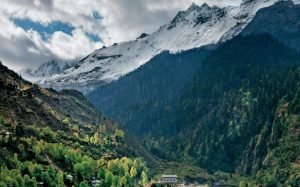
Chapter 2: Everest’s Frozen Diary
1924, near Mount Everest’s summit…
British climber George Mallory vanished here, his body lost for 75 years. When explorers finally found him in 1999, his frost-preserved journal revealed a haunting truth: Everest isn’t just a mountain. It’s a time capsule.
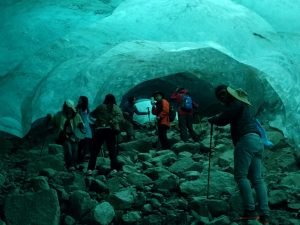
The ice clinging to its slopes holds air bubbles from the Roman Empire, volcanic ash from medieval eruptions, and even pollen from prehistoric forests. Tibetan guides whisper that the mountain “remembers every footstep”—a poetic truth. As climate change melts glaciers, Everest’s ice is surrendering ancient artifacts, from dinosaur-era fossils to long-lost climbing gear.
Chapter 3: The Lake That Swallowed a Kingdom
Legend of Yamdrok Lake…
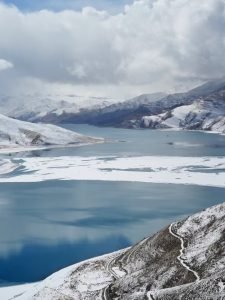 Locals say this turquoise
jewel was born from
a tear shed by a goddess mourning her mortal lover.
But scientists tell a darker tale:
Yamdrok sits atop a tectonic fault line.
Around 1,100 AD, an earthquake split the ground, drowning an entire kingdom.
Today, fishermen still claim to hear ghostly bells ringing from the depths.
Yet Yamdrok is more than a haunted postcard—it’s a lifeline.
Its waters irrigate barley fields that feed Tibetans, while migratory birds treat it as a Himalayan pitstop.
Chapter 4: The Canyon That Defied Gravity
1998, Yarlung Tsangpo Grand Canyon…
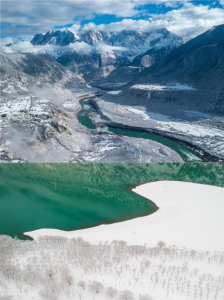
A team of kayakers dared to conquer this “Everest of Rivers,” where the Yarlung Tsangpo River plunges through a gorge twice as deep as the Grand Canyon. One paddler described it as “being swallowed by the Earth”—a place where waterfalls roar like dragons and cliffs rise so steeply, sunlight barely touches the water.
But the canyon isn’t just an adrenaline junkie’s dream. Botanists recently discovered a “lost world” in its humid depths: tropical ferns, blue poppies, and even clouded leopards—species that survived here while Ice Age glaciers scoured the plateau above.
Chapter 5: The Desert’s Singing Sands
Ali region, western Tibet…
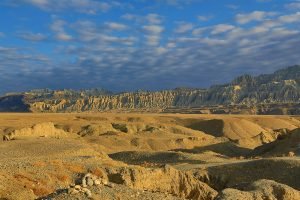
In the Zada tulin Forest, wind-sculpted towers rise like a petrified army. By day, it’s a Mars-like landscape of red dunes; by night, the desert “sings.” When winds whip through the dunes, they emit low hums—a phenomenon locals attribute to spirits.
But the real magic lies beneath the sand. In 2020, archaeologists uncovered 3,000-year-old handprints in a cave here—proof that even in this harsh land, humans carved out a life. Today, nomads still traverse the desert with herds of sheep, following routes etched into the dust by their ancestors.
Epilogue: Why Tibet’s Story Matters
Tibet isn’t just a place—it’s a living library of Earth’s history. Its mountains hold clues to climate change, its rivers quench billions downstream, and its cultures have adapted to extremes for millennia. Yet this fragile wonderland faces threats: melting glaciers, invasive species, and the footprints of tourism.
As adventurer Reinhold Messner once said after surviving an Everest storm: “In Tibet, nature doesn’t care about humans. It simply is—magnificent, indifferent, and utterly alive.”
————————————————————————————————————————————————————–
Ready to Write Your Own Tibetan Tale?
Pro tip: Visit Lake Manasarovar during Saga Dawa Festival. Join pilgrims circling the sacred waters under a full moon—it’s like stepping into a myth.
Fun fact: Tibetan foxes, with their squarish faces and cheeky grins, are nicknamed “the meme kings of the plateau.”
Mark someone who needs a cosmic adventure! To start your dream trip you can contact us!

