For detailed price please inquiry our travel advisor |
Itinerary
Day 1 :
Pick up from Lhasa airport or train stations (3658m)
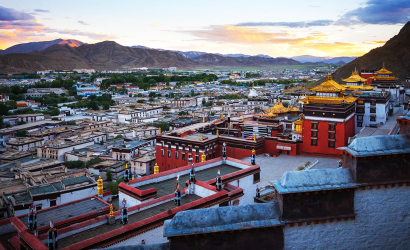
Our Tibetan guide and driver will greet you at the airport or train station and present you with a Kada (the traditional Tibetan ceremonial white scarf) to Welcome you to Tibet :) Then will be drive around 40-50 minutes to Lhasa city if you take plane to Lhasa or drive 20 minutes to Lhasa city if you board train to Lhasa and transferred to your hotel. Along the way, you can enjoy the spectacular scenery of Yarlung Tsangpo River, Lhasa River, and the typical Tibetan villages and highland barley seeds farms.
Later your guide will introduce you to the other members of your group once all are in Lhasa. And will discuss about tour schedule in Tibet. Then will show you some of local, Chinese and continental dish restaurants for the dinner. On your arrival of the first day must be take an easy, relax and keep hydrated by drinking warm water or home temperature water. Will be very helpful to acclimatize to the high altitude.
Overnight in Lhasa.
Day 2 :
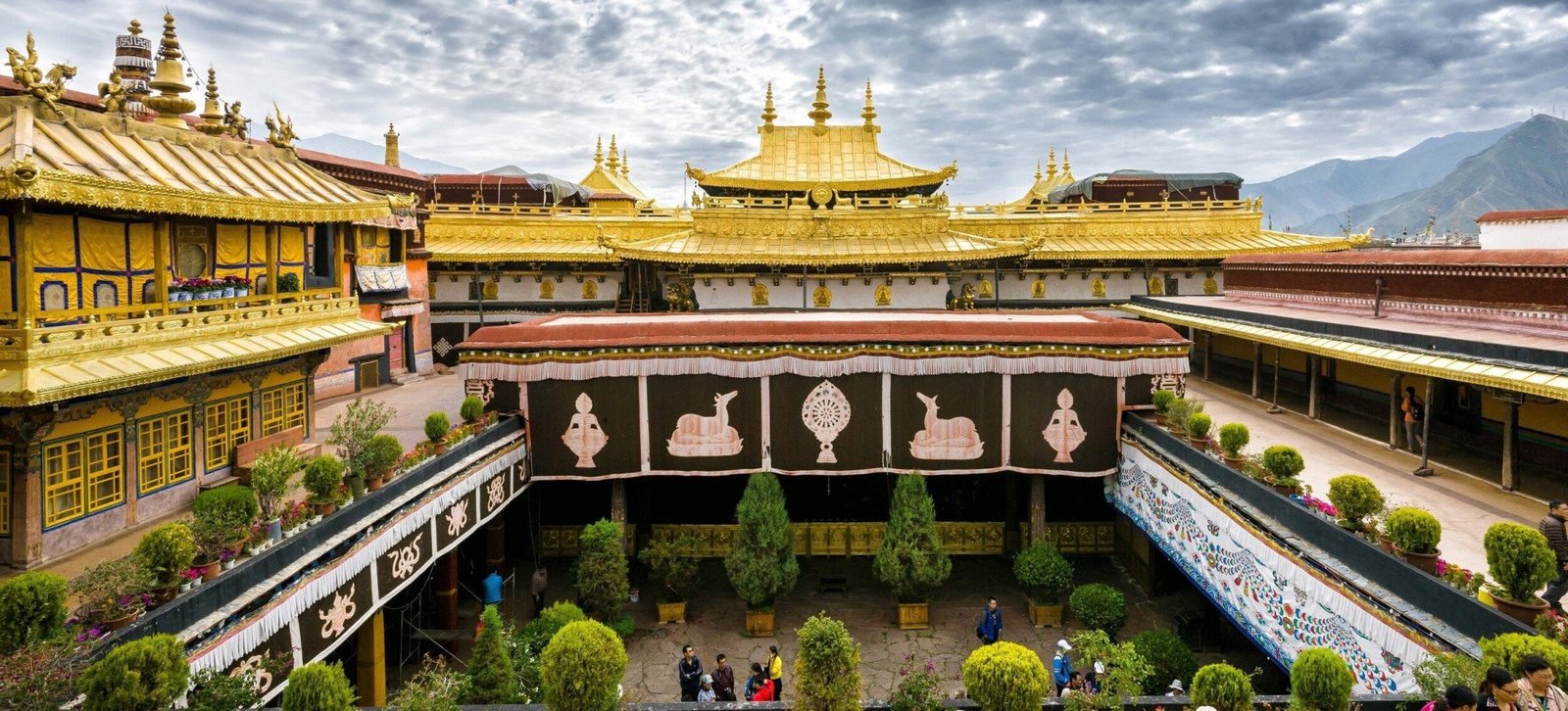
Lhasa sightseeing Attraction: Visit world cultural heritage Potala palace and holy center Tibetan Buddhist Jokhang Templ, Bakhor Street;
The Potala Palace: experience the solemnity and sanctity of world cultural heritage. In the morning, your Tibetan guide and driver will meet you and the other group member at hotel lobby then start from downtown Lhasa and first visit the Potala Palace, which is not only the political, religious and cultural center of Tibet but also the holy land of Tibetan Buddhism.
History of Potala Palace or ancient castle
The Potala Palace is located on the Maburi Mountain (Red Mountain) in the northwest of Lhasa, the capital of the Tibet Autonomous Region of the People's Republic of China. The Potala Palace was built under the leadership of Songtsen Gampo, the 33rd Tibetan king of Tubo, in 631 AD. However, with the disintegration of the Tubo Kingdom, it suffered severe damage due to natural and man-made disasters. In 1645, the Fifth Dalai Lama rebuilt the Potala Palace to consolidate the political and religious unity of the Ganden Pohang region, and continued to expand it until it reached its current size. The Potala Palace was designed and built according to the layout of Buddhist mandalas, covering a total area of over 360000 square meters and a total construction area of over 130000 square meters. The main building is 117 meters high and has 13 floors. It is a large palace style architectural complex with 1267 rooms, including palaces, stupas, Buddhist halls, administrative offices, monk schools, and monk houses. The main works of the building have two systems: the White House and the Red Palace. The White House is the place where the Dalai Lamas of past dynasties govern and live. The Red Palace is the place for religious activities and the place where the Dalai Lamas of past dynasties worship their stupas. The building form of the White House around the Red Palace reflects the social system of the integration of politics and religion in old Tibet. After 1959, the Central Committee of the Communist Party of China and the State Council attached great importance to the maintenance and protection of the Potala Palace, and allocated maintenance funds throughout the year. Two phases of maintenance were carried out in 1988 and 2001. On March 4, 1961, the Potala Palace was announced by the State Council of the People's Republic of China as the first batch of national key cultural relics protection units. In 1994, the Potala Palace was listed as a World Cultural Heritage site by UNESCO. Potala Palace is the winter palace of all previous Dalai Lamas, and also the ruling center of the integration of politics and religion of Tibet’s m local rulers in the past. Since the fifth Dalai Lama, major religious and political ceremonies have been held here. At the same time, it is a place to worship the spiritual tower of all previous Dalai Lamas.
Overnight in Lhasa
Day 3 :
Lhasa train station or airport send off
Today is the 3rd day to leave Tibet and your tour guide and driver will come on time to send off Lhasa train station or airport. This will end your tour services in Tibet. Thanks for your trust and support to us. Tashi Delek
Breakfast