For detailed price please inquiry our travel advisor |
Itinerary
Day 1 :
Arrive in Guangzhou and Tour Canton Tower at Night
After our clients arrive in in Guangzhou airport, the guide will be greeting you and later get you transferred to your hotel. You can have a good rest and explore around nearby streets.
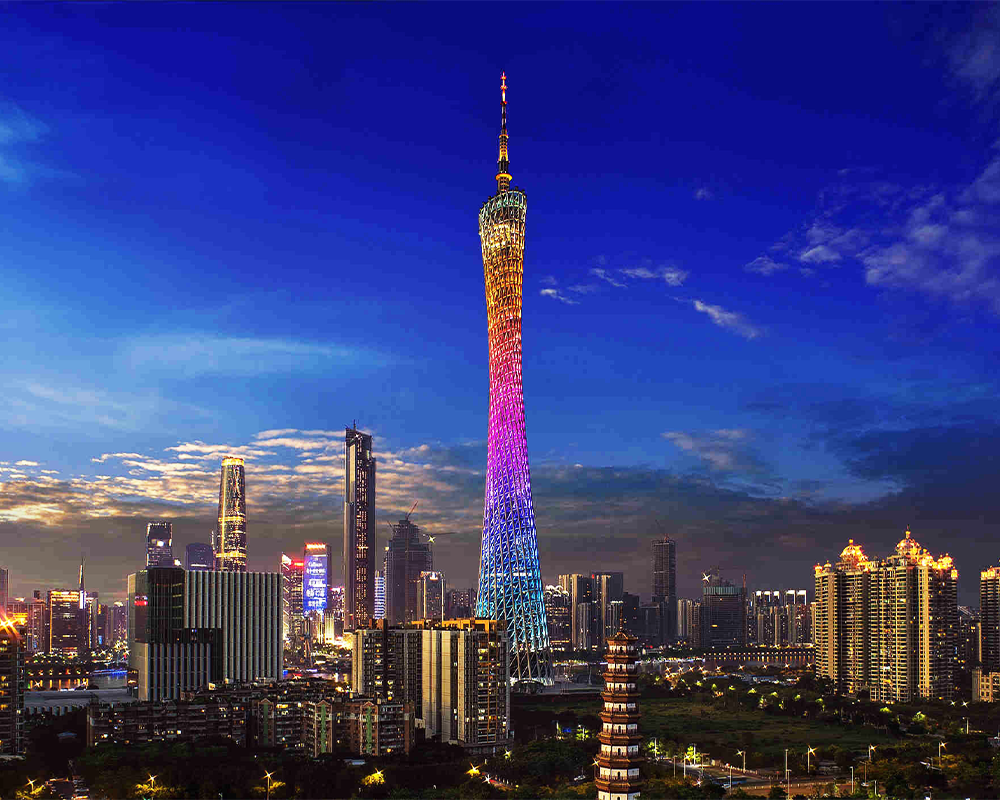
After dinner, we will head to enjoy the spectacular night view of Guangzhou City from Canton Tower, a must-visit for first-timers to Guangzhou. Canton Tower is the second highest tower in the world. And it features the world’s highest bubble tram and longest spiral staircase, and jaw-dropping Sky Drop. The sky drop made it in the Guinness Book of World Records as the highest thrill ride in the world. Do bring your camera for the sunning panoramic night view of the Guangzhou City.
Day 2 :
Chen Clan Ancestral Hall, Sun Yat-sen Memorial Hall, Chimelong International Circus
In the morning, we are expected to visit Chen Clan Ancestral Hall,mainly used as an academy for the Chen family to stay and study while preparing themselves for the imperial examination. Now, it is the home of the Guangdong Folk Art Museum. The historical complex truly is an oasis of tranquility and covers a total of approximately 13, 200 square meters. You can see exquisite porcelain, and amazing ornaments, sculptures, architecture and other handicrafts associated with the Qing dynasty. Overall, it’s a fantastic place for photography and cultural stroll.
In the afternoon, another brilliant historical site awaits history buffs, i.e. well-known Sun Yat-sen Memorial Hall. Mr. Sun Yat-sen is revered in China as forerunner of Chinese democratic revolution. The Memorial Hall, situated on the southern slope of Yuexiu Hill, gives a full display of the life of Sun Yat-sen via historical photos and documents. You may also the two biggest white jade orchid trees of Guangzhou and enchanting landscaped gardens. The Memorial hall itself has an important historic value for China.
At night, all of us will enjoy the world-class performance by Chimelong International Circus. You will definitely be blown away by non-stop mesmerizing entertainment. From jaw dropping stunts to the shows of the adorable animals, it’s worth every penny spent on it.
Stay overnight in Guangzhou
Day 3 :
Guangzhou-Lhasa train to Tibet
In the morning, we will board the Guangzhou-Lhasa train and begin to enjoy the long ride. The Train Z264 departs at 11:45 and the entire ride covers 4980km, the longest train route for Qinghai-Tibet Railway. And it takes about 53:45 Hours to reach Lhasa.
Insider Tips: Do get prepared such as small snacks or fruits, books, music to kill time. Throughout the entire train journey, you will witness the most diverse topography and city scenes of mainland China.
Stay overnight in the train
Day 4 :
Train Ride to Tibet
The second day of the long ride, the train will pass Xi’an to Xining, which is the beginning of the highlights of Tibet Train journey.
Stay overnight in the train
Day 5 :
Scenery View of Tibet Railway
A full day window sightseeing along Qinghai-Tibet Railway, you will see land of snows, desert, immense grassland, ice mountain, beautiful lakes which will fairly entertaining.
Shortly after your arrival in Lhasa in the late afternoon of third day, you will be warmly received by your tour guide who would say TashiDelek, which means wishing you all the best and transferred to your hotel in Lhasa. You can have a good rest to acclimatize the high altitude.
Insider Tips: To avoid acute altitude sickness, it’s highly advisable to have a good rest at your hotel. And never rush to tour attractions yourself inside the Lhasa city. Drink much water and eat vegetable. Meanwhile, it’s recommended not to have showers for the first couples of days in Lhasa to minimize the chance of catching cold.
Stay overnight in Lhasa
Day 6 :
Sightseeing in Lhasa; Attraction; Drepung Monastery , Sera Monastery. Guide will arrange your Lunch with local taste in monastery restaurant;
After the breakfast our driver and guide will pick you up from hotel and drive to the monasteries. Today, you will visit Drepung and Sera monastery from morning around 9:00 to 5:00 pm. Both of monasteries offering a unique insight into Tibetan Buddhism. And will also have local food taste from the monastery restaurant
History of Drepung Gompa
Drepung monastery is one of the six major monasteries of Gelukpa order. Drepung, Ganden and Sera Monastery are known as the three major and highest ranking monasteries in Lhasa. It was once one of the world’s largest monastery where in the pass day there were over 10,000 monks who studies as well as lives in there. It was a town itself at time Drepung is Tibetan name which means heap of rice. It is located in a valley on the southern slope of Mount Genpuwuzi, about 8 kilometers to the west of central of Lhasa city. It was founded in 1416 by the Jamgyang Choejee Tashi Paldan the disciple of the founder of the Yellow Sect, Tsongkhapa master. There are countless halls in Drepung monastery with the most famous being the "Jampa Thongdorl" hall in religious terms and the most important being the "Ganden Potang" hall in political terms. The "Jampa
Thongdrol " (Maitreya Sees Liberation) Hall is located on the northwest side of the third floor of the Tsochen Hall. Although it is not large in scale, it is famous for its main statue of Maitreya at the age of eight. A continuous stream of believers came to worship. Inside the hall, there is also the precious treasure of the temple - the white conch was bless by the Budhha Shayakmuni when he was in India . When Tsongkhapa ordered Jamyang Choejee Tashi Paldan to build the Drepung Monastery, he would hand over the white seashells personally excavated by Tsongkhapa before the construction of Ganden Monastery to Tashi Paldan and wish the temple a success. This collection of seashells has always been kept in the Maitreya Hall. There are also six main scripture halls in the temple: 1. Ganden Podang Chapel 2. Tsochen Hall 3. Tantric Monastery 4. Losaling collage 5. Guomang collage 6. Deyang collage.
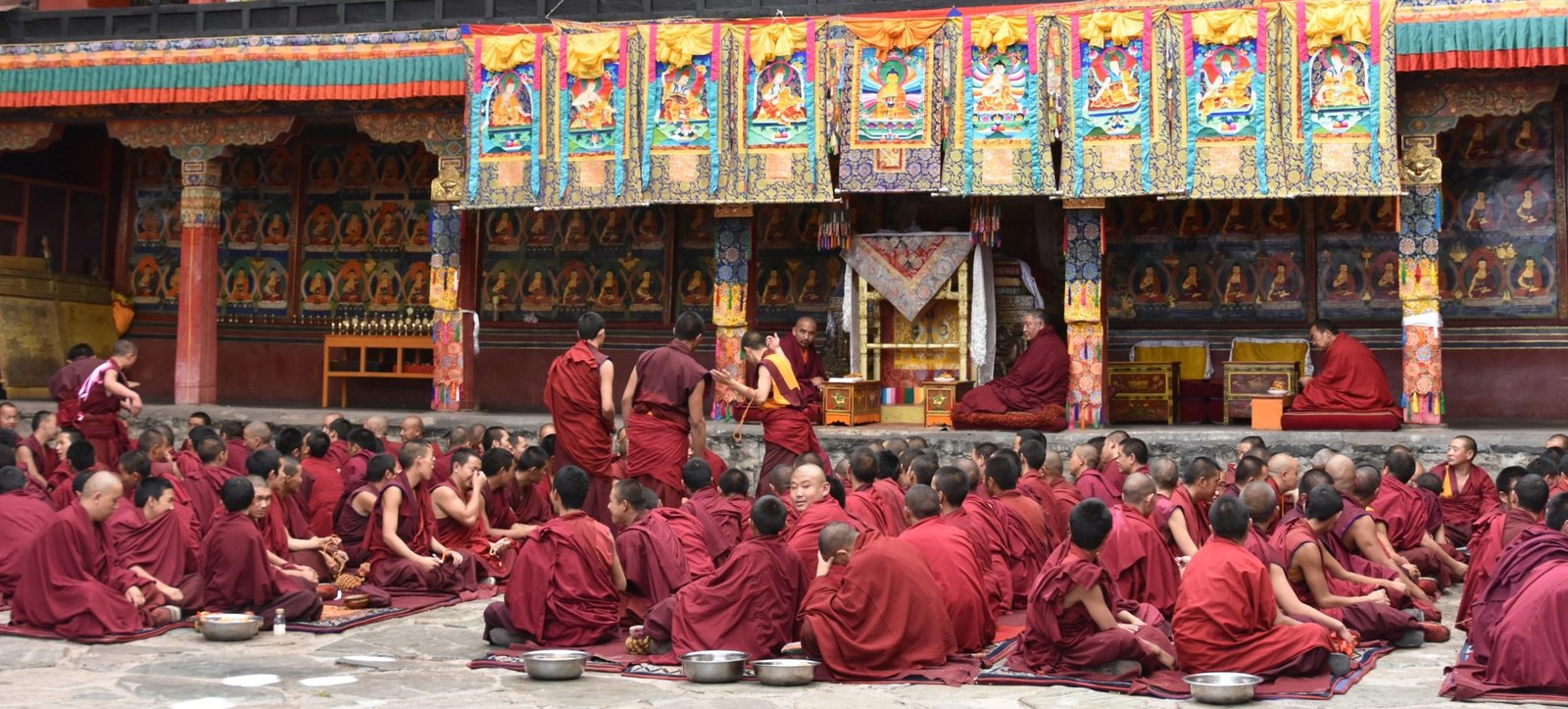
After around 3 hour’s visiting of the Drepung Gompa will have a 1 hour lunch time for locate taste from the monastery restaurant then drive to next scenic spots. The most interesting thing in the Sera Gompa is Buddhist philosophy debate. The debate venue of Sera Monastery is part of the traditional learning method of the Gelug sect of Tibetan Buddhism, and the debate ceremony starts at 3 pm to 5 pm from Monday to Friday. When debating scriptures, monks usually sit on the ground while another stands across from them, exaggerating their movements to debate the scriptures. This is a discussion of Buddhist knowledge and also a way for lamas to learn. The debate ceremony of Sera Monastery is well-known in Tibetan areas and attracts many tourists to visit. Except for special holidays, the debate venue holds debate activities from Monday to Friday, giving visitors the opportunity to witness this unique form of religious learning firsthand.
History of Sera Gompa
Sera Monastery, also known as Sera Mahayana Monastery, is one of the six main monasteries of the Gelug sect in Tibetan Buddhism. Along with Drepung monastery and Ganden monastery, it is known as one of the three major temples in Lhasa and is the latest one built among them. Sera Monastery is a national key cultural relic protection unit, located at the foot of Sera Uzi Mountain, 3 kilometers north of central part of Lhasa city. It is surrounded by willow forests and has been a place for high monks and living Buddhas to preach since ancient times. There are many small monasteries for monks and nuns surrounding it. In the 17th year of the Yongle reign of the Ming Dynasty (1419), Jamchen Shakya Yeshi, a disciple of Tsongkhapa master, built it, which was completed in the 9th year of the Xuande reign of the Ming Dynasty (1434). Later, Jamchen Shakya Yeshi was summoned to Beijing and granted the title of Great Compassionate Dharma King. After returning to Tibet, the imperial bestowed sutras and statues were preserved in the temple and still exist today. At its peak, there were over 8000 monks in the monastery, slightly smaller in scale than the Drepung Monastery. There are tens of thousands of Vajra statues in the Sera Gompa, most of which are made locally in Tibet. There are also many bronze Buddha statues brought from mainland China or India. The walls of the main hall and various Tazang scripture halls preserve a large number of original colored murals. The most famous statue is the " Protector Hayagriwa " statue in the main hall. The main buildings include Tsochen (Assembly Hall), Jee Tazang, Mai Tazang, Ngapa Tazang, and 32 Kang Tsan villages. The early buildings were centered around Mai Tazang and Ngapa Tazang , and were later expanded and renovated throughout history to have the current scale, so there was no overall plan for the layout. But the architecture of Sera Monastery is dense but not crowded, diverse but not chaotic, tailored to local conditions, with a prominent main body, reflecting the unique style of Gelugpa monasteries, and is entirely a religious city.
Transfer you back to the hotel after the tour.
Breakfast, Lunch
Day 7 :
Sightseeing in Lhasa City Attraction; Potala Palace, Jokhang temple and Bakhor Street;
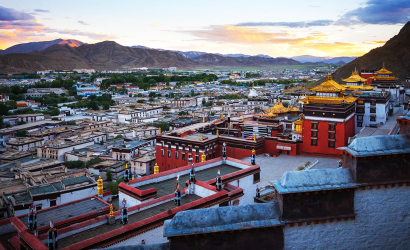
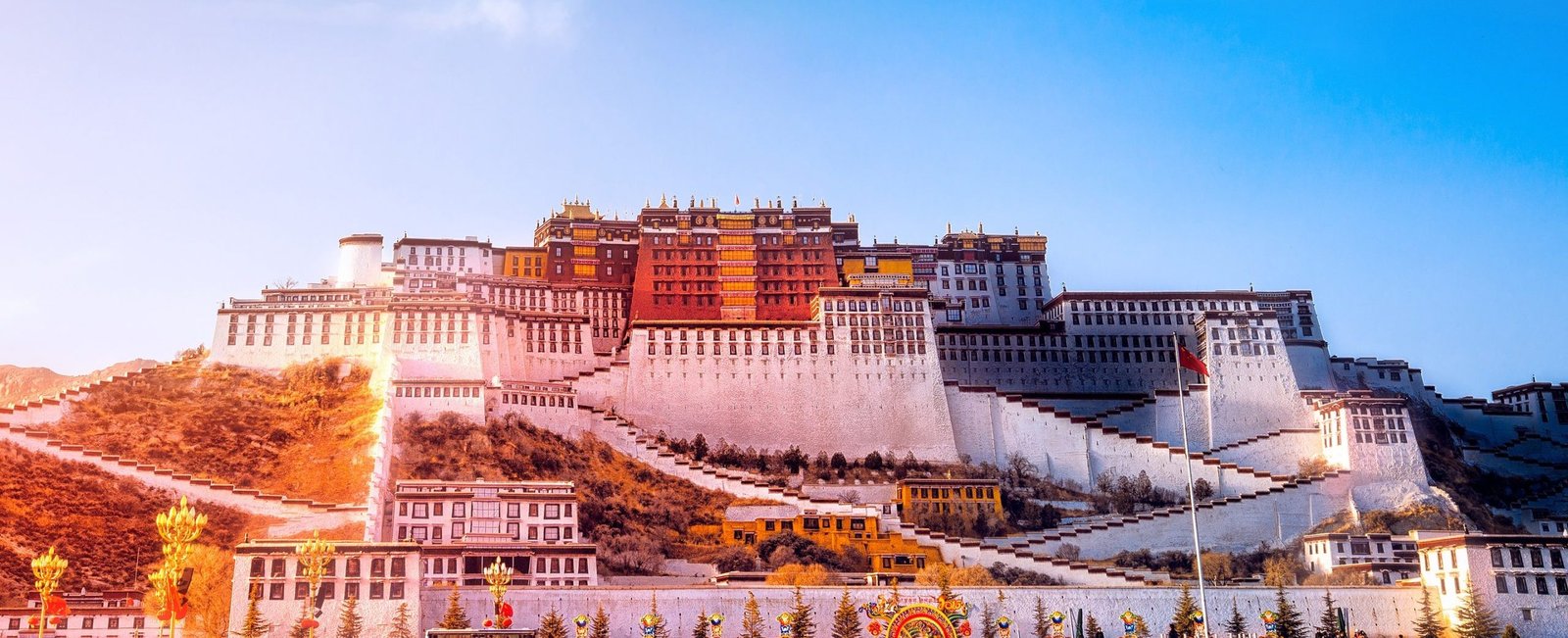
In the morning, your Tibetan guide and driver will meet you and the other group member at hotel lobby then start from downtown Lhasa and first visit the Potala Palace, which is not only the political, religious and cultural center of Tibet but also the holy land of Tibetan Buddhism.
History of Potala Palace or ancient castle
The Potala Palace is located on the Maburi Mountain (Red Mountain) in the northwest of Lhasa, the capital of the Tibet Autonomous Region of the People's Republic of China. The Potala Palace was built under the leadership of Songtsen Gampo, the 33rd Tibetan king of Tubo, in 631 AD. However, with the disintegration of the Tubo Kingdom, it suffered severe damage due to natural and man-made disasters. In 1645, the Fifth Dalai Lama rebuilt the Potala Palace to consolidate the political and religious unity of the Ganden Pohang region, and continued to expand it until it reached its current size. The Potala Palace was designed and built according to the layout of Buddhist mandalas, covering a total area of over 360000 square meters and a total construction area of over 130000 square meters. The main building is 117 meters high and has 13 floors. It is a large palace style architectural complex with 1267 rooms, including palaces, stupas, Buddhist halls, administrative offices, monk schools, and monk houses. The main works of the building have two systems: the White House and the Red Palace. The White House is the place where the Dalai Lamas of past dynasties govern and live. The Red Palace is the place for religious activities and the place where the Dalai Lamas of past dynasties worship their stupas. The building form of the White House around the Red Palace reflects the social system of the integration of politics and religion in old Tibet. After 1959, the Central Committee of the Communist Party of China and the State Council attached great importance to the maintenance and protection of the Potala Palace, and allocated maintenance funds throughout the year. Two phases of maintenance were carried out in 1988 and 2001. On March 4, 1961, the Potala Palace was announced by the State Council of the People's Republic of China as the first batch of national key cultural relics protection units. In 1994, the Potala Palace was listed as a World Cultural Heritage site by UNESCO. Potala Palace is the winter palace of all previous Dalai Lamas, and also the ruling center of the integration of politics and religion of Tibet’s m local rulers in the past. Since the fifth Dalai Lama, major religious and political ceremonies have been held here. At the same time, it is a place to worship the spiritual tower of all previous Dalai Lamas.
Afternoon we will go to Jokhang Temple to experience the strong religious atmosphere. Then we will stroll along Barkhor Street, taste authentic Tibetan cuisine, and purchase handicrafts. In the evening, you can go to see the night view of the majestic Potala Palace to enjoy the beautiful night walk.
History of Jokhang temple
Jokhang Temple, located in Lhasa, Tobey Autonomous Region, is a central Tibetan Buddhist temple and also a central of the universe too. It was founded in 647 A.D. by the Tibetan King Songtsen Gampo to commemorate Princess Wencheng's entry into Tibet. Jokhang Temple has a long history of more than 1300 years. It is one of the most splendid existing buildings in Tibet during the Tibetan period and the earliest civil structure building in Tibet. The temple was originally called "Rasa", later evolved into "Lhasa", and eventually became the name of the city. Jokhang Temple is not only a Buddhist temple, but also a three-dimensional representation of the ideal model of the universe in Buddhism - the mandala. The architectural style of Jokhang Temple combines the characteristics of Tibetan, Tang, Nepalese, and Indian architecture, and is a model of Tibetan religious architecture. There are statues of Shakyamuni and other figures enshrined in the temple, as well as statues of Songtsen Gampo, Princess Chizun, and Princess Wencheng. The temple has undergone multiple expansions and modifications, especially during the Yuan, Ming, and Qing dynasties, forming its current scale. Jokhang Temple is not only a pilgrimage site for Tibetan Buddhists, but also a sacred temple revered by various sects. The "Golden Urn Lottery" ceremony for the reincarnation of Gelug Living Buddhas has always been held here. Breakfast
Day 8 :
Depart from Lhasa;
Today is your last day in Tibet and we really want share the beautiful landscape of Tibet so we highly recommend to visit Longest lake in Tibet.