Tibetan tour guide and driver will greet you at the airport and present you with a Kada (the traditional Tibetan ceremonial white scarf) to Welcome you to Tibet :) then drive to Tsedang the journey takes about 1 hour and 48 minutes, and the distance is 95.6 kilometers. and
transferred to your hotel. Along the way, you can enjoy the spectacular scenery of Yarlung Tsangpo River and the typical Tibetan villages and highland barley seeds farms. Later your guide will discuss about tour schedule then will show you some of local, Chinese and continental dish
restaurants for the dinner. On your arrival of the first day must be take an easy, relax and keep hydrated by drinking warm water or home temperature water. Will be very helpful to acclimatize.
Overnight at Tsedang
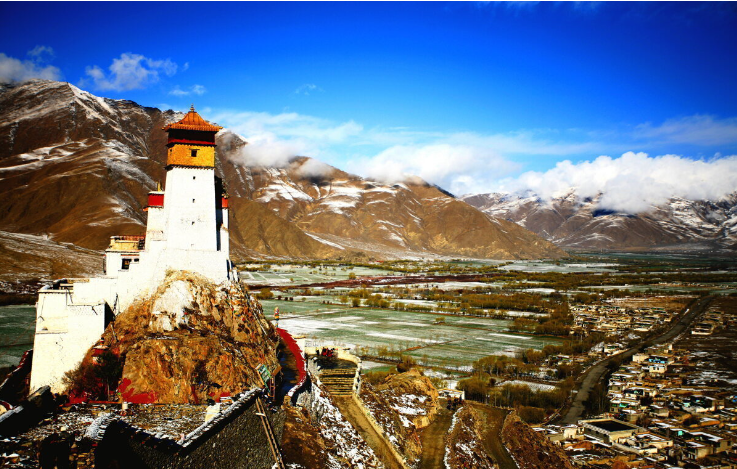
Morning around 9 am go to Yongbulakhang, the first palace in Tibet, which is located on the mountain in Tashi, southeast of Tsedang Town, Shannan City. The palace architecture is magnificent and spectacular, and from the mountain, one can overlook the beautiful scenery of the entire city of Tsedang. Here, you can learn about the history and culture of the Tubo Dynasty, with a visit time of about 1-2 hours feel the air of roof of the world. Due to the ancient palace located on the mountain we need to walk up the top there for there is option that we can hire local horse to carry with 50RMB for one way. Will drive back to the Tsedang town around 1pm and visit Trandruk temple around 1 hours to explore the cultural in Shannan city. Tradruk Temple is located at the southern foot of Gompuri Mountain. Built during the Songtsen Gampo period, it is said that Princess Wencheng once stopped and practiced at the temple. There is a copper bell hanging in the temple. Temple is one of the first Buddhist temples built during the Tubo period. The more important in this temple is- it is renowned for its rich heritage, especially the precious treasure of Silk Thangka chapel- the Pearl Tangka "The Resting of Compassion Buddha". This thangka is 2 meters long and 1.2 meters wide, set with 29026 pearls and various gemstones, showcasing its high artistic value and religious significance. Pearl Thangka is a treasure in Tibetan Buddhist art, with complex and exquisite production techniques that require the creator to possess superb skills and a devout attitude. The pearl thangka of Trandruk Temple not only embodies the exquisite craftsmanship of Tibetan Buddhist art, but also carries rich historical and cultural connotations, making it a sacred object that tourists and believers eagerly admire. Todays visiting spot end from here and will have free time to walk in the city.
Overnight at Tsedang
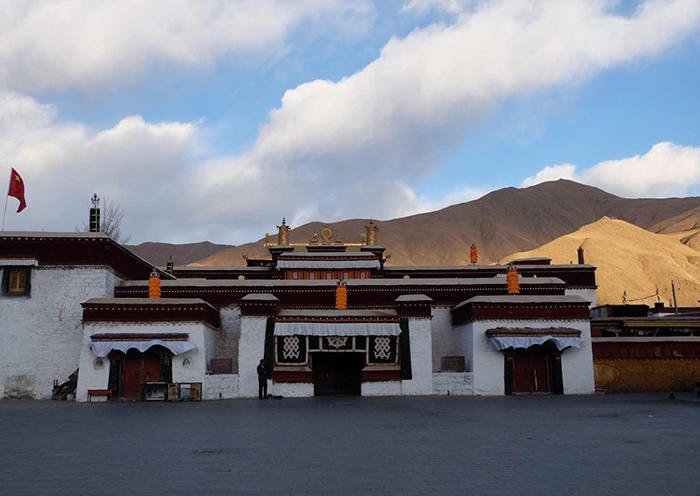
This morning we will drive to Samye monastery around 9 am. Shannan Sangye Temple is approximately 38 kilometers away from town. Located at the foot of Zama Mountain on the north bank of the Yarlung Tsangbo River in Tatsang County, Shannan, Samye monastery is first temple in Xizang, with unique architectural style, integrating Tibetan, Han and Indian architectural styles. Here, you can appreciate ancient temple architecture, exquisite murals, and precious cultural relics, and feel the profound history and cultural heritage of Tibetan Buddhism. The visit time is about 2-3 hours. As an important temple of Tibetan Buddhism, Samye Monastery not only has a superior geographical location, but also a long history and culture, making it a holy land worth visiting. Evening we can high up Hepori to over look hole town of the Samye monastery.
Overnight at Samye monastery
A day trekking to the Chimpu Hermitage
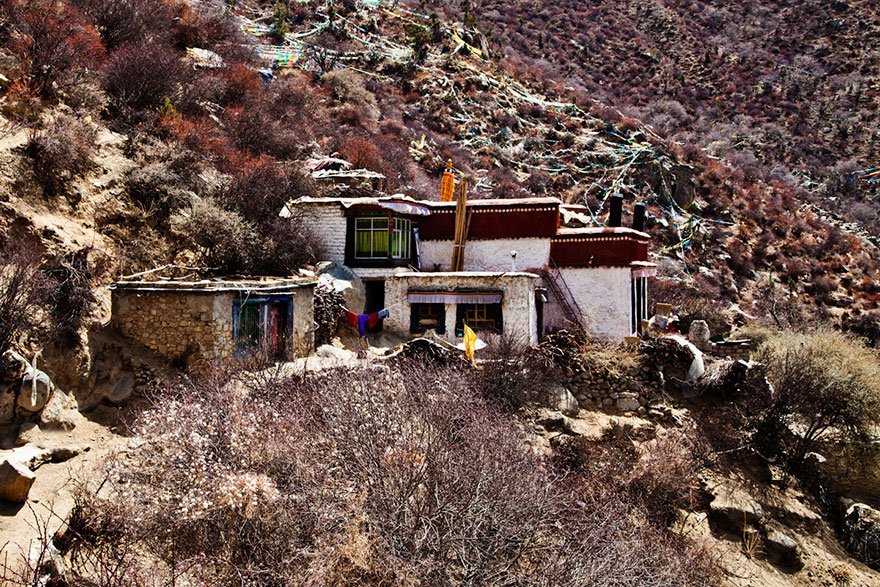
We will drive around 9 am to the Chimpu hermitage. Chimpu is geographical location, it is practice site is located on the side of Narui Mountain, 15 miles northeast of Samye monastery in Shannan, Xizang, with an altitude of 4300 meters. It is surrounded by mountains on three sides, and is open to the the Yarlung Zangbo River in the south, with a wide view. Profound historical and cultural heritage: This is a place of seclusion for Tibetan Buddhism, where renowned Tibetan monks such as Master Padmasambava and King Trisong Detsan practiced and left behind numerous sacred relics, earning it the title of "cradle of Tibetan Buddhism". Beautiful natural environment: The place has gurgling streams, dense vegetation, wildflowers blooming everywhere, numerous birds, mild climate, and is an ideal holy land for self-cultivation and enlightenment. The atmosphere of cultivation is strong: There are still many practitioners practicing here today, living isolated lives and seeking inner peace and transcendence. At the same time, this is also a holy place for Tibetan compatriots to pilgrimage and pray for blessings. Will drive back to Tsedang around 4-5 pm
Overnight at Samye monastery
Natural scenery: During the journey, you may pass through magnificent mountains, vast grasslands, and unique Tibetan landforms. The Nanshan Park and Zonggap Lukang Park around Lhasa showcase charming autumn scenery in autumn, and the trees along the Lhasa River are also breathtaking. Cultural landscape: As the capital of Xizang, Lhasa has rich cultural heritage and religious buildings. As a landmark building in Xizang, Potala Palace is a must visit place for tourists. In addition, the Sera Uzi hiking route is also worth trying, as it offers a panoramic view of Lhasa city and visits to small temples hidden in high-altitude mountains along the way. Lhasa will be an exploration journey full of surprises and discoveries. Whether it is natural scenery or cultural landscapes, it will leave a deep impression on travelers. Evening walk around Bakhor street and night view of Potala palace.
Overnight at Lhasa
Guide will arrange your Lunch with local taste in monastery restaurant;
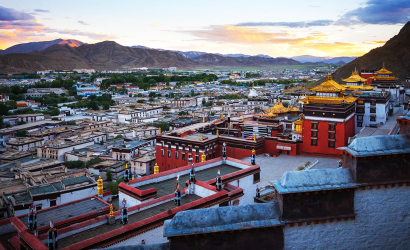
After the breakfast our driver and guide will pick you up from hotel and drive to the monasteries. Today, you will visit Drepung and Sera monastery from morning around 9:00 to 5:00 pm. Both of monasteries offering a unique insight into Tibetan Buddhism. And will also have local food taste from the monastery restaurant. Drepung Monastery is an important monastery of the Gelug sect of Tibetan Buddhism in China, located in the western suburbs of Lhasa. It is one of the three major monasteries in Lhasa. The Drepung Monastery was founded in 1416 by the disciple of Master Tsongkhapa, Jamyang Choeje Tashi Paldan. It is one of the highest ranking monasteries in the Gelug sect and also one of the largest monasteries in the world. The monastery is built along the mountain, with a grand scale. The white buildings cover the hillside, and from a distance, it looks like a huge pile of rice, hence the name "Drepung" (meaning rice gathering). Drepung Monastery is an important carrier of Tibetan Buddhist culture, with numerous monks who engage in daily activities such as chanting and debating scriptures. In addition, during the annual Shoten Festival, the Drepung Monastery also holds a grand Buddha drying ceremony, attracting a large number of believers and tourists to come and watch.
Afternoon visit Sera monastery. Sera Monastery is one of the six main monasteries of the Gelug sect of Tibetan Buddhism, located at the foot of Sera Uzi Mountain in the northern suburbs of Lhasa. It is the latest among the three major monasteries in Lhasa. Sera Monastery was built by Tsongkaba disciple Jamchen Choeje in the (1419). It is not only a national key cultural relic protection unit, but also holds an important position in the Tibetan Buddhist community. The architectural style of Sera Monastery is unique, mainly Tibetan style, magnificent and grand. The main buildings include Tsochen Hall, Je Tacang, Mai Tacang, Ngapa Tacang, etc., with a staggered layout that reflects the unique style of the Gelugpa Monastery. Sera Monastery is famous for its scripture debate activities. Starting at 3 pm every day, monks engage in intense debates on the debate field, and the scene is very exciting. In addition, Sera Monastery also houses a large number of art treasures such as scriptures, thangkas, pile embroidery, murals, etc. for tourists to worship and appreciate.
Overnight at Lhasa
In the morning, your Tibetan guide and driver will meet you at hotel lobby then start from downtown Lhasa and first visit the Potala Palace, which is not only the political, religious and cultural center of Tibet but also the holy site of Tibetan Buddhism.
History of Potala Palace or ancient castle
The Potala Palace is located on the Maburi Mountain (Red Mountain) in the northwest of Lhasa, the capital of the Tibet
Autonomous Region of the People's Republic of China. The Potala Palace was built under the leadership of Songtsen Gampo, the
33rd Tibetan king of Tubo, in 631 AD. However, with the disintegration of the Tubo Kingdom, it suffered severe damage due to
natural and man-made disasters. In 1645, the Fifth Dalai Lama rebuilt the Potala Palace to consolidate the political and religious
unity of the Ganden Pohang region, and continued to expand it until it reached its current size. The Potala Palace was designed
and built according to the layout of Buddhist mandalas, covering a total area of over 360000 square meters and a total construction area of over 130000 square meters. The main building is 117 meters high and has 13 floors. It is a large palace style
architectural complex with 1267 rooms, including palaces, stupas, Buddhist halls, administrative offices, monk schools, and monk
houses. The main works of the building have two systems: the White House and the Red Palace. The White House is the place
where the Dalai Lamas of past dynasties govern and live. The Red Palace is the place for religious activities and the place where
the Dalai Lamas of past dynasties worship their stupas. The building form of the White House around the Red Palace reflects the
social system of the integration of politics and religion in old Tibet. After 1959, the Central Committee of the Communist Party of
China and the State Council attached great importance to the maintenance and protection of the Potala Palace, and allocated
maintenance funds throughout the year. Two phases of maintenance were carried out in 1988 and 2001. On March 4, 1961, the
Potala Palace was announced by the State Council of the People's Republic of China as the first batch of national key cultural relics
protection units. In 1994, the Potala Palace was listed as a World Cultural Heritage site by UNESCO. Potala Palace is the winter
palace of all previous Dalai Lamas, and also the ruling center of the integration of politics and religion of Tibet’s m local rulers in
the past. Since the fifth Dalai Lama, major religious and political ceremonies have been held here. At the same time, it is a place to
worship the spiritual tower of all previous Dalai Lamas.
Afternoon we will go to Jokhang Temple to experience the strong religious atmosphere. Then we will stroll along Barkhor Street,
taste authentic Tibetan cuisine, and purchase handicrafts. In the evening, you can go to see the night view of the majestic Potala
Palace to enjoy the beautiful night walk.
History of Jokhang temple
Jokhang Temple, located in Lhasa, Tobey Autonomous Region, is a central Tibetan Buddhist temple and also a central of the
universe too. It was founded in 647 A.D. by the Tibetan King Songtsen Gampo to commemorate Princess Wencheng's entry into
Tibet. Jokhang Temple has a long history of more than 1300 years. It is one of the most splendid existing buildings in Tibet during
the Tibetan period and the earliest civil structure building in Tibet. The temple was originally called "Rasa", later evolved into
"Lhasa", and eventually became the name of the city. Jokhang Temple is not only a Buddhist temple, but also a three-dimensional
representation of the ideal model of the universe in Buddhism - the mandala. The architectural style of Jokhang Temple combines
the characteristics of Tibetan, Tang, Nepalese, and Indian architecture, and is a model of Tibetan religious architecture. There are
statues of Shakyamuni and other figures enshrined in the temple, as well as statues of Songtsen Gampo, Princess Chizun, and
Princess Wencheng. The temple has undergone multiple expansions and modifications, especially during the Yuan, Ming, and Qing
dynasties, forming its current scale. Jokhang Temple is not only a pilgrimage site for Tibetan Buddhists, but also a sacred temple
revered by various sects. The "Golden Urn Lottery" ceremony for the reincarnation of Gelug Living Buddhas has always been held
here.
Overnight in Lhasa
Today we are leaving Lhasa to Mt. Everest base camp via Yamdrok lake, ancient town Gyantse, the highland barley seeds store
room of Tibet Shigate. We need to bring all our luggage and go to discovering new experiences and wonders on the way to Lhasa,
Gyantse, Shigatse and Mt.Everest base camp. It is the best choice to travelers who like experience about different Tibetan cultural
and take photos of it. We can see an awesome landscape out side of Lhasa city around 50 Km and will reach top of the Khampala
and can view the full sight of Yamdrok Lake. It is located in Nangkar tse County in the Shannan region of Tibet, less than 100
kilometers away from Lhasa and is called the three holy lakes in Tibet together with Namtso and Manasarovar. Unique location,
south of the mountain; The beauty of lakes and mountains is unparalleled in southern Tibet. The Yamdrok Yongtso Lake is the
sacred lake in the hearts of local Tibetans, and it is also a must see tourist landscape in Tibet. It gives people a clear and ethereal,
dreamlike atmosphere. By driving along the Lake and villages we will be at our lunch place for an hour. Then keep drive to ancient
city by crossing several interesting villages, high pass, Glacier, monastery, 100,000 statue of stupa, canola flowers and barley
seeds farms. (Please Note: Our guide and one of the our group member needs time to obtain the Alien’s Travel Permit (ATP) from
the local Public Security Bureau from Gyangtse on your arrival or Shigatse before you depart ). The ATP is a required permit that
will be issued for the border check at Shegar and every check point of the Nepal border.)
Overnight in Shigtse
The journey from Shigatse to Lhasa is full of unique Tibetan customs and magnificent natural scenery. The distance from Shigatse to Lhasa is about 270 kilometers, and you can choose to take a train, plane, or long-distance bus to get there. Among them, the train is the most common mode of transportation, with a travel time of about 2 hours and the fastest train trip taking 2.35 hours. During the journey, you can also gain a deeper understanding of Tibetan culture and way of life, and feel the enthusiasm and simplicity of the Tibetan people. The journey from Tsedng, Lhasa, Gyangtse and Shigatse was an unforgettable experience, with both natural scenery and cultural charm that left people reluctant to leave. End the tour