Menu

8 Days Tibet is on the Road Tour

8 Days

Itinerary

Day 1 :
Feilai Temple -Saltyi - Mangkham County, Deqin, Yunnan. 219 km

This itinerary covers natural scenery and cultural experiences, making it a rich and colorful travel route. Starting point of Feilai Temple. Feilai Temple is located in Deqin County, Yunnan Province .You can watch the sunrise of Meili Snow Mountain and experience the cultural atmosphere of Tibetan Buddhism. And keep driving to Mangkham passing through salt wells. It is located at the junction of Yunnan Province and Xizang. Experience the unique scenery of salt fields and learn about local salt making techniques. Then endpoint of Mangkham County. It is located in the southeast of Xizang Autonomous Region, bordering Sichuan and Yunnan. Explore the pearls of eastern Tibet and experience the integration of diverse ethnic cultures.
Breakfast
Overnight in MangKham

Day 2 :
Mangkham county - Zogong county. 140 kilometers
The starting point is Mangkham County, which is the intersection of Yunnan Tibet Highway and Sichuan Tibet Highway, and is an important transportation hub. Crossing the Mountains: Starting from Mangkham County, it is necessary to cross the Jueba Mountain, Laou Mountain, and the Dongda Mountain Pass with an altitude of over 5008 meters to reach Zuogong County. The road conditions are not very good, coupled with high altitude, people may feel uncomfortable during the journey. But the scenery along the way from Mangkham to Zuogong is varied, with magnificent mountains and unique geographical features. Jueba Mountain is an important scenic spot, and the steep beauty of its Hengduan Mountains is breathtaking. The highway extends on a cliff, and along the way, you can enjoy the magnificent scenery of three rivers flowing together, making it a good subject for photography. Rumei Town is a low altitude town located on the banks of the Lancang River. The 318 National Highway passes through the town and serves as a supply point during the journey. Dongda Mountain Pass has an altitude of over 5130 meters, making it the highest mountain pass on the Sichuan Tibet Highway. The scenery is extremely beautiful, but it is important to pay attention to its altitude. Zuogong County, located in the southeast of the Xizang Autonomous Region, has a unique climate and geographical features, such as the Yuqu River, Lancang River and Nujiang River running through it, creating a variety of holy mountains and lakes. Breakfast Overnight in Zogong
Day 3 :
Zuogong -Bangda Military Station(14 kilometers) - Ranwuhu 186Km
Morning we starting from Zuo Gong, passing through multiple locations, and finally arriving in Ranwuhu. This journey crosses mountains and canyons, making it a very challenging section of the Sichuan Tibet Highway. Zuo Gong to Bangda Military Station is 14 kilometers. This is the beginning of the journey, starting from Zuo Gong and soon arriving at the Bangda Military Station. Bonda Station is an important supply and rest point, which is crucial for long-distance travelers.This journey is relatively long, but the scenery along the way is very magnificent. Yela Mountain (Nujiang Mountain) is a magnificent mountain range with an elevation of over 4670 meters, and is an important node on the journey. The altitude changes significantly during the descent from high mountains to Ba Su. Ba Su is an important transportation hub and supply point where travelers can rest and replenish their supplies. Travelers need to adapt to the mountainous environment while enjoying the beautiful scenery along the way. The longest and final stretch of the journey. Ranwuhu is a beautiful town located in the core area of the Sichuan Tibet Highway. After arriving in Ranwuhu, you can enjoy magnificent natural scenery and unique Tibetan culture. Overall, this journey is full of challenges and beautiful scenery. You need to have good physical strength and adaptability to cope with high mountain environments and long journeys. At the same time, you will also have the opportunity to appreciate the most magnificent natural scenery and unique ethnic culture along the Sichuan Tibet Highway. Breakfast Overnight in Ranwuhu
Day 4 :
Ranwuhu - Bomi - Lulang - Linzhi. 350 km
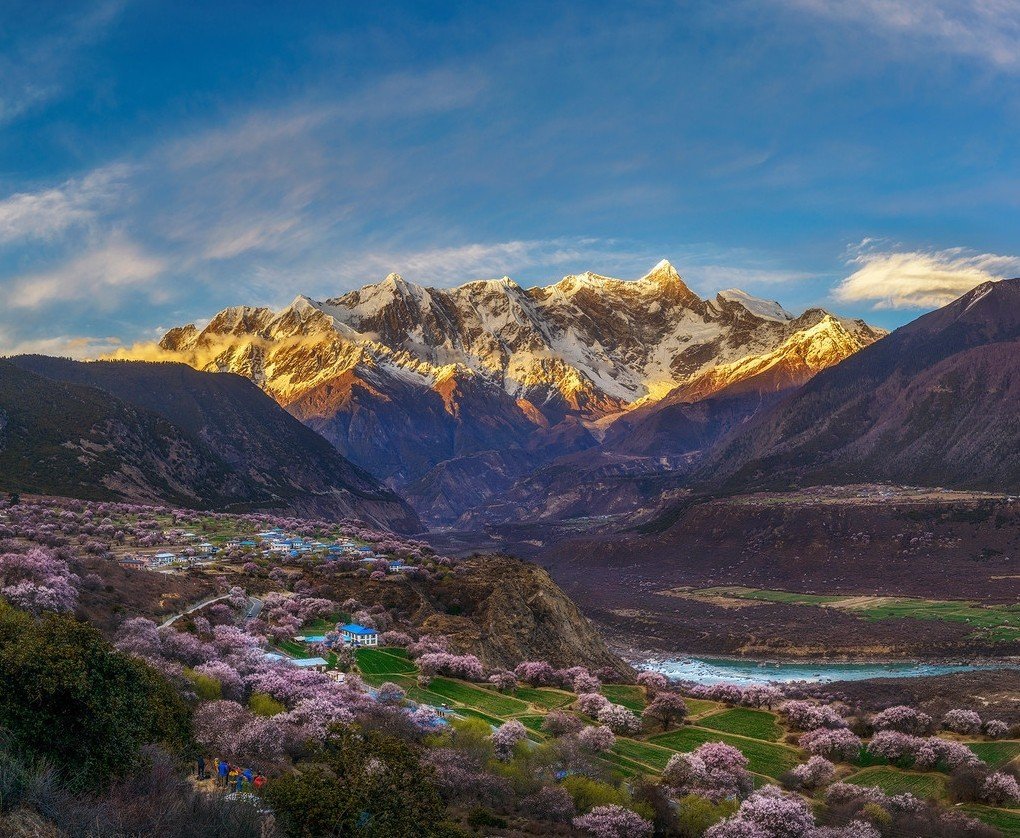
The scenery along the route is stunning. Along the way, you can see the scenery of the Pamlung river valley and admire the forests, cloud seas and snow mountains of southeast Tibet. Over the "natural hazards" of Lirong and Tongmei, view the Yaroslav River Grand Canyon scenery, enter the Ruhan Forest Sea, watch the Nanjakbawa Peak, known as "the most beautiful snow mountain in China," climb over the Xiemara (over 4,700 meters above sea level), view the forest sea, cloud sea, snow mountain and other natural landscapes. Main attractions: Namjakbawa Peak: Mount Sejila is the classic scenery of Linzhi/Kongpo. On the mountain pass with an altitude of more than 4700 meters, you can overlook the majestic beauty of Namjakbawa Peak at an altitude of 7787 meters. Namjakbawa Peak ranks 15 in the world, and is opposite to the Galapagal White Barrier Peak at an altitude of 7294 meters. Mount Bodhi: Mount Bodhi, next to the village of Daza on the southern slopes of Thrace, is a sacred site of the Tibetan religion, and is one of the four sacred mountains in Tibet. There are a steady stream of people visiting the mountain to worship. On August 10th of the Tibetan calendar, a large scale mountain crossing is also held. Breakfast Overnight in Linzhi
Day 5 :
Nyingtri/Kongpo - Basumtso/Draksum Tso - Kongpo Gyamda (124 km) - Mirashan pass (5,013 m) - Riduo (122 km) - Lhasa, 401 km.
This morning starting from Nyingtri/Kongpo, passing through Draksum Tso Lake, Kongpo Gyamda Mira Mountain Pass, and finally arriving in Lhasa. Nyingtri is famous for its beautiful natural scenery and rich Tibetan culture and the famous lake located near Nyingtri, known for its clear water and beautiful mountain scenery around it. It is a popular tourist attraction where you can enjoy the beautiful scenery of lakes and mountains. From Draksum Tso Lake, it takes about 124 kilometers to reach Kongpo Gyamda. This is a midway station located between Nyingchi and Lhasa, with unique Tibetan customs and beautiful natural scenery. the capital city of Xizang. With rich historical and cultural heritage and unique Tibetan customs. After around 450Km will reach to the Lhasa City. Lhasa is one of the important tourist destinations in Xizang. Tourists can visit the Potala Palace, Jokhang Temple and other famous scenic spots here to feel the mystery and charm of Xizang. Overall, this is a journey full of natural beauty and Tibetan culture. Starting from Nyingtri, passing through Draksum Tso Lake, Kongpo Gyamda and some Pass, and finally arriving at Lhasa, you can enjoy the magnificent scenery and unique culture of Xizang during this journey. Breakfast Overnight in Lhasa
Day 6 :
Lhasa sightseeing Attraction; Land mark of Tibet Potala palace and Jokhang temple, Bakhor street;
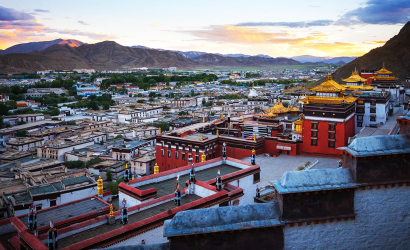
The Potala Palace: experience the solemnity and sanctity of world cultural heritage. In the morning, your Tibetan guide and driver will meet you and the other group member at hotel lobby then start from downtown Lhasa and first visit the Potala Palace, which is not only the political, religious and cultural center of Tibet but also the holy land of Tibetan Buddhism. History of Potala Palace or ancient castle The Potala Palace is located on the Maburi Mountain (Red Mountain) in the northwest of Lhasa, the capital of the Tibet Autonomous Region of the People's Republic of China. The Potala Palace was built under the leadership of Songtsen Gampo, the 33rd Tibetan king of Tubo, in 631 AD. However, with the disintegration of the Tubo Kingdom, it suffered severe damage due to natural and man-made disasters. In 1645, the Fifth Dalai Lama rebuilt the Potala Palace to consolidate the political and religious unity of the Ganden Pohang region, and continued to expand it until it reached its current size. The Potala Palace was designed and built according to the layout of Buddhist mandalas, covering a total area of over 360000 square meters and a total construction area of over 130000 square meters. The main building is 117 meters high and has 13 floors. It is a large palace style architectural complex with 1267 rooms, including palaces, stupas, Buddhist halls, administrative offices, monk schools, and monk houses. The main works of the building have two systems: the White House and the Red Palace. The White House is the place where the Dalai Lamas of past dynasties govern and live. The Red Palace is the place for religious activities and the place where the Dalai Lamas of past dynasties worship their stupas. The building form of the White House around the Red Palace reflects the social system of the integration of politics and religion in old Tibet. After 1959, the Central Committee of the Communist Party of China and the State Council attached great importance to the maintenance and protection of the Potala Palace, and allocated maintenance funds throughout the year. Two phases of maintenance were carried out in 1988 and 2001. On March 4, 1961, the Potala Palace was announced by the State Council of the People's Republic of China as the first batch of national key cultural relics protection units. In 1994, the Potala Palace was listed as a World Cultural Heritage site by UNESCO. Potala Palace is the winter palace of all previous Dalai Lamas, and also the ruling center of the integration of politics and religion of Tibet’s m local rulers in the past. Since the fifth Dalai Lama, major religious and political ceremonies have been held here. At the same time, it is a place to worship the spiritual tower of all previous Dalai Lamas. Breakfast Overnight in Lhasa
Day 7 :
A Day trip to explore the Gadan monastery;
Gaden monastery is located on Wangpori Mountain, Taktse County, Lhasa, Tibet Autonomous Region. It is the first monastery of the Gelug Sect of Tibetan Buddhism. The monastery is founded by the founder of the Gelug sect, Master Tsongkhapa, in 1409. Therefore, it was built on a mountain and almost occupies half of the mountain today, earning it the title of "City of the Sky". The Gadan is not only the ancestral home of the Gelug sect, but also listed as a national key cultural relic protection unit, and is known as one of the "Three Great Tibetan Buddhist monastery of Lhasa" along with the Drepung monastery and Sera Monastery. The total construction area of the Gadan Temple is about 30,000 square meters, and the main buildings include the Tsochen Hall, the Tsongkhapa living room, the Yangbajian Sutra Chapel, and the Tsongkhapa master’s tomb Pagoda Hall. There are also two Tacang in the monastery, monk living quarter and scripture printing press hall. When we visiting the Gadan monastery, tourists can appreciate its magnificent architecture and rich cultural heritage. Recommended attractions include visiting the main hall of Tsochen with Golden Throne of the Gaden Tripa, Maitreya Hall, the golden tomb of the mater Hall, etc. Among them, the tomb Hall preserves the Tsongkhapa master’s real body and is the most sacred place in the temple. In addition, tourists can also participate in traditional religious ceremonies such as offering incense, doing rotate of the Monastery can experience fabulous landscapes around the monastery and experience the unique charm of Tibetan culture. The Ganden Monastery is not only a monastery with a long history, but also an important window for understanding the Gelug culture of Tibetan Buddhism. For you who love history and cultural exploration, it is a place not to be missed. Then return to Lhasa in the evening. Breakfast Overnight in Lhasa
Day 8 :
Lhasa - Khampala Pass - Yamdrok Lake then send off to Lhasa airport/ train station from Lhasa

Today is the time to say Good bye to Tibet, in order to complete the Tibet tour, we designed Tibet Yamdrok Yongtso Lake for you on the last day then drive to Lhasa airport or train station on time.

Yamdrok Yongtso, which means "jasper lake" in Tibetan, is located in Gongga County and Langka County, Shannan City, Tibet Autonomous Region, next to the Yamdrok lake Scenic Area of Provincial Highway 307, and is called the three holy lakes in Tibet together with Namtso and Manasarovar. The lake covers an area of 638 square kilometers. Yamdrok Yongtso is the largest enclosed inland lake in the southern part of the Qinghai Tibet Plateau, with an elevation of 4441 meters, an average depth of about 23.6 meters, a water storage capacity of about 16 cubic kilometers, a shoreline of 250 kilometers, a drainage area of 6100 square kilometers, and a lake water reserve of about 16 billion cubic meters. According to observations and calculations by the local forestry department, the bird islands and bird populations in Yamdrok Yongtso Lake are rare in the country. On these islands, various bird species are found and inhabit. In addition to birds, there are extremely rich species of wild animals inhabiting the Yamdrok Yongtso Lake basin, including mammals such as snow leopards, argali, diarrhea, otters, wild donkeys, rock sheep, yellow sheep, and deer, which are classified as national first and second class protected animals. Yamdrok Yongtso is a unique natural scenic spot integrating plateau lakes, snow mountains, islands, pastures, hot springs, wild animals and plants, temples and other landscapes. It, together with Namtso and Manasarovar, is known as the three major heavenly lakes in Tibet. There are also perennial insoluble snow mountains and ice peaks around, the highest of which is more than 7000 Lakes, snow capped peaks, and blue sky blend together meters above sea level.

By driving along the Lake and village for an hour then drive to Lhasa airport or train station send off.
End the Tour
Breakfast
Singe trips